

Trade Show KPIs Every U.S. Exhibitor Should Track to Prove ROI, Not Just Attendance

Trade Show KPIs Every U.S. Exhibitor Should Track to Prove ROI, Not Just Attendance
Explore Giveaway GiftsKey Takeaways
-
Tracking the right trade show KPIs helps exhibitors move beyond vanity metrics and prove real ROI to leadership teams.
-
Successful exhibitors focus on lead quality, engagement depth, and pipeline influence, not just booth footfall.
-
Trade show ROI tracking is most effective when KPIs are aligned with clear goals set before the event.
-
Premium, personalized giveaway gifts can significantly improve booth dwell time, brand recall, and follow-up response rates when measured correctly.
-
Reviewing KPIs 30, 60, and 90 days post-event provides a far more accurate picture of event marketing analytics and long-term impact.
Trade shows in the USA are back in full force—but so are rising costs, tighter budgets, and tougher ROI questions from leadership. Booth space, logistics, travel, staffing, and giveaways can quickly turn a single exhibition into a five-figure investment. Yet many exhibitors still evaluate success using vague indicators like footfall or “good conversations.”
That’s where trade show KPIs come in.
Without clear exhibitor performance metrics, even the most visually stunning booth or busiest aisle presence can fail to justify its spend. Modern trade show ROI tracking is no longer about counting business cards—it’s about measuring pipeline impact, brand recall, and buyer intent.
For brands investing in premium experiences—such as customized giveaway gifts for trade shows that create memorable brand moments—KPIs help connect emotional engagement to measurable outcomes.
If you’re investing in corporate giveaway gifts for trade shows in the USA, this guide will help you track what truly matters, align event marketing analytics with revenue goals, and make smarter decisions for future exhibitions.
Stand out from competitors by choosing unique giveaway gifts that go beyond standard pens and notebooks. Read more →
The Evolution of Trade Show Measurement
Historically, trade show success was measured in surface-level metrics: number of visitors, brochures distributed, or samples handed out. In today’s data-driven B2B environment, those metrics barely scratch the surface.
U.S. exhibitors now operate in an ecosystem where CRM systems, marketing automation, and attribution models allow deeper insight into how events influence revenue. According to trade show industry benchmarks from CEIR , trade shows remain one of the most effective channels for high-intent buyer engagement—but only when tracked correctly.
At the same time, decision-makers demand accountability. CFOs want ROI. Sales teams want qualified leads. Marketing teams want attribution clarity.
This shift has elevated event marketing analytics from a post-event report to a strategic planning tool—impacting booth size, staffing decisions, and even the type of giveaways chosen. Brands increasingly pair KPI planning with structured preparation guides like how to plan a successful trade show booth in the USA .
For example, brands that invest in customized, take-home gifts—like premium printed chocolates—often see higher recall weeks after the event. However, without KPIs tied to engagement and follow-up behavior, this impact remains anecdotal.
The result? Smart exhibitors now build KPI frameworks before the event—not after—aligning goals, metrics, and gifting strategies upfront.
Corporate Giveaway Gifts for Expo, Exhibition & Trade Shows
Attract attention and drive brand recall with premium corporate giveaway gifts featuring personalized chocolate branding for expos and trade shows.
Explore Giveaway Gifts NowCore Problem: Most Exhibitors Track the Wrong KPIs
One of the biggest mistakes U.S. exhibitors make is tracking activity metrics instead of outcome metrics.
Counting booth visitors is easy. Measuring lead quality, deal velocity, or influenced revenue is harder—but infinitely more valuable.
Here’s the common disconnect:
- Marketing celebrates high foot traffic
- Sales complains about poor lead quality
- Leadership questions the event’s ROI
This happens when exhibitors fail to align KPIs with business objectives. A brand awareness event should not be judged solely on cost per lead, just as a lead-generation show shouldn’t rely on social impressions alone.
Another blind spot is ignoring giveaway impact. Low-cost swag may inflate booth traffic but fail to drive recall. Premium, personalized gifts—such as branded chocolate boxes—often attract fewer but more qualified conversations. This is why experienced exhibitors combine KPI planning with resources like the trade show goals: brand awareness vs lead generation framework.
KPIs help answer critical questions:
- Did this event generate sales-ready leads?
- Did giveaways improve booth dwell time?
- Did post-event follow-ups convert faster?
Without the right trade show success metrics, exhibitors risk repeating expensive mistakes—or worse, cutting events that are quietly driving pipeline value.
Eco-friendly giveaway gifts resonate strongly with modern audiences and align well with sustainability-focused brand values. Read more →
Key Concepts: The Core Trade Show KPI Framework
To track trade show ROI effectively, exhibitors should organize KPIs into five strategic pillars:
1. Attendance & Engagement KPIs
- Booth visitors per day
- Average booth dwell time
- Giveaway engagement rate
- Demo participation rate
Premium, personalized giveaways often increase dwell time by encouraging longer conversations instead of quick grab-and-go visits.
2. Lead Quality & Sales Readiness Metrics
- Marketing Qualified Leads (MQLs)
- Sales Accepted Leads (SALs)
- Lead-to-meeting conversion rate
- Cost per qualified lead
3. Brand Awareness & Recall Indicators
- Brand recall surveys
- Post-event website traffic lift
- Social mentions and QR scans
- Email engagement post-event
4. Revenue & Pipeline Attribution
- Pipeline influenced by event
- Deal velocity post-event
- Revenue per lead
- Event ROI percentage
5. Cost & Efficiency KPIs
- Cost per lead
- Cost per opportunity
- Giveaway cost vs engagement
- ROI per square foot of booth space
When these pillars work together, exhibitors gain a 360-degree view of performance—connecting engagement, gifting strategy, and revenue impact into one coherent framework.
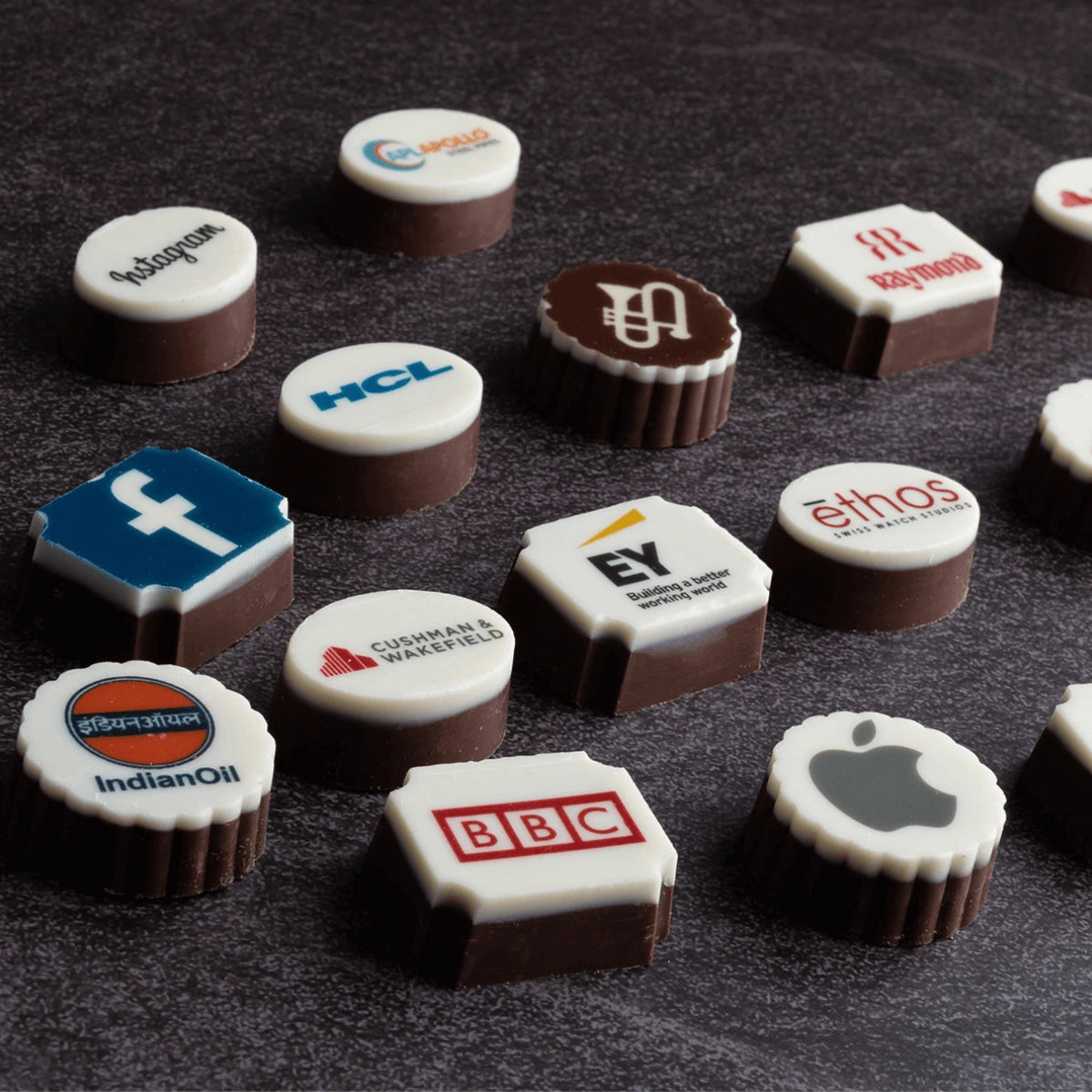
Personalized Corporate Giveaway Chocolates
Custom-branded chocolate giveaway gifts designed to boost visibility at exhibitions and corporate events.
Customize for Your BrandData, Research & Real-World Examples: What the Numbers Reveal
Industry research consistently shows that trade shows remain one of the highest-intent B2B channels—but only for exhibitors who measure beyond surface metrics.
According to U.S. trade show spending data from Statista , companies invest thousands per event once booth space, travel, staffing, and promotions are included. Yet many still lack structured trade show ROI tracking, relying on anecdotal feedback instead of data-backed insights.
This is why organizations increasingly refer to exhibitor performance benchmarks published by CEIR to justify spend and refine strategy.
A Harvard Business Review analysis on experiential marketing reveals that in-person brand experiences significantly improve brand recall compared to digital-only touchpoints. This explains why premium, tactile elements—such as thoughtfully designed booths or memorable giveaway gifts—often outperform low-cost promotional tactics.
McKinsey Quarterly further highlights that B2B events accelerate deal velocity when integrated with CRM workflows , particularly when follow-ups are timely and personalized.
In practice, exhibitors who tracked booth dwell time and post-event follow-ups found that attendees who spent longer at the booth converted faster in sales pipelines. Similarly, brands offering personalized, take-home gifts often report fewer total leads—but a higher percentage of sales-ready conversations.
This reinforces a critical insight: trade show success is not about volume, but about intent, engagement, and follow-through.
Practical How-To: How to Track Trade Show KPIs Step by Step
Tracking trade show KPIs does not require complex software—only clarity, consistency, and planning.
Step 1: Define Event Goals Before You Exhibit
Before booking booth space, decide what success means—brand awareness, qualified leads, or pipeline acceleration. KPI alignment starts during planning, which is why many exhibitors reference a 90-day trade show planning timeline .
Step 2: Map KPIs to Each Funnel Stage
- Top-of-funnel: booth traffic and engagement rate
- Mid-funnel: MQLs and meetings booked
- Bottom-funnel: pipeline influenced and deals closed
This structured approach prevents overvaluing vanity metrics, a mistake often highlighted in discussions about trade show success metrics most companies ignore .
Step 3: Track Giveaways as Engagement Assets
Instead of counting how many items you distributed, track conversations per giveaway, dwell time impact, and follow-up response rates. Premium, customized giveaway gifts—such as printed chocolate boxes—function as conversation starters rather than disposable swag.
Many exhibitors deliberately choose corporate gifts for trade shows that balance perceived value with portability and brand recall.
Step 4: Connect KPI Data to CRM & Follow-Ups
Ensure booth scans and notes sync with CRM tools. Segment leads by decision-maker status, urgency, and product interest to guide personalized follow-ups.
Step 5: Review KPIs 30, 60, and 90 Days Post-Event
True trade show ROI often appears after the event ends. Reviewing KPIs over time reveals whether your exhibitor performance metrics were predictive indicators or just short-term noise.
Budget-friendly giveaway gifts can still feel premium when chosen strategically—focus on usefulness over quantity. Read more →
Trends & Future Outlook: Where Trade Show Analytics Is Headed
Trade show measurement in the USA is becoming more integrated, experience-driven, and insight-focused.
One emerging trend is engagement-weighted KPIs, where a five-minute conversation with a qualified decision-maker carries more value than multiple brief booth visits. This thinking aligns with modern event marketing analytics discussed in Forbes coverage on measuring event marketing ROI .
Another trend is experience-based ROI modeling. Exhibitors are evaluating how physical experiences—booth design, interactions, and gifting—influence trust, recall, and long-term customer relationships.
Sustainability and personalization are also shaping future KPIs. Brands are measuring quality over quantity, favoring fewer but more intentional interactions supported by thoughtfully chosen giveaway gifts.
Conclusion: Turning Trade Show KPIs into Smarter Decisions
Trade shows remain one of the most powerful B2B marketing channels in the USA—but only for exhibitors who measure what truly matters.
By focusing on the right trade show KPIs, exhibitors move beyond gut feeling into data-driven clarity. From lead quality and engagement depth to revenue influence and brand recall, the right metrics reveal whether your investment is paying off.
For brands that invest in premium, customized giveaway gifts, KPIs connect emotional engagement to measurable outcomes—proving that memorable experiences drive real business results.
Planning your next exhibition? Explore premium giveaway solutions that elevate engagement and support measurable ROI:
- 2 Chocolate Box Corporate Gifts
- 4 Chocolate Box Corporate Gifts
- 6 Chocolate Box Corporate Gifts
- 9 Chocolate Box Corporate Gifts
- 12 Chocolate Box Corporate Gifts
- 18 Chocolate Box Corporate Gifts

Mini Coupon Box as Giveaway
📦 Box: Logo + “Here’s a Deal”
📝 Message Inside: Coupon code — “Use this for 20% off today only”
🍫 Chocolates: One with “20% OFF”, one with “Special Offer” or logo
🎯 Purpose: Converts booth visitors into instant buyers by creating urgency and measurable online sales.
Make it for your BrandKey Information
| KPI Category | What It Measures | Why It Matters |
|---|---|---|
| Booth Engagement | Booth visitors, dwell time, giveaway interactions | Indicates how effectively your booth and experience attract and hold attention |
| Lead Quality | MQLs, SALs, meeting conversions | Helps sales teams focus on high-intent prospects instead of raw lead volume |
| Brand Impact | Brand recall, post-event traffic, email engagement | Shows whether the trade show improved awareness and memorability |
| Revenue Influence | Pipeline influenced, deal velocity, revenue per lead | Connects the trade show directly to business outcomes and ROI |
| Cost Efficiency | Cost per lead, cost per opportunity | Ensures trade show spending is optimized and sustainable |
| Giveaway Performance | Engagement per gift, follow-up actions | Measures whether giveaway gifts drive meaningful conversations |
| Post-Event Momentum | Follow-up response rates, CRM activity | Reveals how well leads progress after the event ends |
Frequently Asked Questions (FAQs)
1. How do you measure trade show success beyond foot traffic?
Trade show success should be measured using KPIs such as lead quality, booth dwell time, pipeline influenced, and post-event conversions. While foot traffic shows visibility, exhibitor performance metrics reveal whether conversations turned into real business opportunities. This approach ensures trade show ROI tracking reflects actual outcomes, not just activity.
2. What are the most important trade show KPIs for B2B exhibitors in the USA?
Key trade show KPIs include cost per qualified lead, MQL-to-SAL conversion rate, pipeline influenced by the event, and brand recall metrics. U.S. exhibitors benefit from focusing on event marketing analytics that connect booth engagement to CRM data and long-term revenue impact.
3. How do you calculate trade show ROI accurately?
Trade show ROI is calculated by comparing total event costs against revenue influenced or generated from the event. This includes booth costs, staffing, travel, and giveaways. Accurate trade show ROI tracking requires reviewing data 30, 60, and 90 days post-event, not just immediately after the show.
4. Are trade shows still worth it for lead generation?
Yes, trade shows remain highly effective when measured correctly. Research shows attendees often have buying authority, making trade shows ideal for high-intent leads. When exhibitors track lead quality and pipeline contribution instead of just lead volume, trade shows consistently deliver strong ROI.
5. What KPIs should be tracked after a trade show ends?
Post-event KPIs include follow-up response rates, meetings booked, pipeline influenced, and deal velocity. These exhibitor performance metrics reveal whether the trade show created momentum or stalled after the booth closed, making them critical for accurate event marketing analytics.
6. How do giveaway gifts impact trade show KPIs?
Giveaway gifts influence booth dwell time, conversation quality, and brand recall. Premium, personalized gifts often lead to fewer but more qualified interactions. When tracked properly, giveaway-related KPIs help exhibitors understand how gifting contributes to trade show ROI and engagement quality.
7. What is a good cost per lead for trade shows in the USA?
A good cost per lead varies by industry, but the key is cost per qualified lead rather than raw leads. Trade show KPIs should benchmark cost against lead quality and pipeline contribution to determine whether the event delivered real business value.
8. How soon should trade show performance be reviewed?
Trade show performance should be reviewed immediately after the event and again at 30, 60, and 90 days. This staged review captures long sales cycles and provides a more accurate view of trade show ROI tracking and revenue impact.
9. What tools help track trade show KPIs effectively?
CRM systems, badge scanners, post-event surveys, and marketing automation tools are commonly used to track trade show KPIs. When combined with clear goals and defined metrics, these tools turn raw event data into actionable exhibitor insights.
10. What is the biggest mistake exhibitors make with trade show metrics?
The biggest mistake is focusing on vanity metrics like booth traffic while ignoring lead quality and revenue influence. Without aligning KPIs to business goals, exhibitors risk misjudging event performance and making poor decisions about future trade show investments.
