

Trade Show Goals Explained: Should You Prioritize Brand Awareness or Lead Generation?

Trade Show Goals Explained: Should You Prioritize Brand Awareness or Lead Generation?
Explore Giveaway GiftsKey Takeaways
-
Trade show success starts with clear goals—brand awareness and lead generation require different strategies, metrics, and giveaway approaches.
-
You can’t optimize for everything at once; intentional alignment between objectives, booth experience, and giveaways drives higher ROI.
-
Premium, memorable giveaways (like customized chocolates) work best for brand recall, while tiered gifting supports qualified lead capture.
-
A hybrid strategy—with one primary goal and one secondary goal—delivers the most consistent results for US exhibitors.
-
Measuring the right KPIs (not just lead counts) reveals the true impact of trade shows over time.
Walk into any major trade show in the USA—CES, NRF, Expo West—and you’ll hear the same question whispered across booths: “Are we actually getting anything out of this?”
Trade shows demand serious investment. Booth design, travel, staffing, sponsorships—and yes, corporate giveaway gifts—can easily run into six figures. Yet many exhibitors still walk in without clearly defining their trade show goals.
Some teams obsess over badge scans and lead counts. Others care more about visibility, impressions, and buzz. The truth? Brand awareness vs lead generation isn’t a binary choice—it’s a strategic decision that should shape every aspect of your trade show marketing strategy.
For brands like ChocoCraft, which work closely with US exhibitors using premium, customized chocolate giveaways, one insight stands out: the most successful booths don’t chase everything. They align exhibitor objectives, giveaways, and follow-up into a single, intentional goal.
If you’re investing in trade shows this year, this guide will help you choose the right goal—and execute it profitably. Explore premium giveaway gifts for expo and trade shows that align with your objectives.
Stand out from competitors by choosing unique giveaway gifts that go beyond standard pens and notebooks. Read more →
Why Trade Show Goals Get Blurry
Trade shows sit at an awkward intersection of branding and sales. Unlike digital ads or email campaigns, they don’t deliver instant attribution. A handshake today may convert six months later.
According to research from the Center for Exhibition Industry Research, over 80% of trade show attendees influence purchasing decisions, yet only a fraction buy immediately. That’s why exhibitors often struggle to define success.
Historically, trade shows were lead machines—scan badges, dump contacts into CRM, move on. But modern B2B buyers are skeptical, distracted, and overwhelmed. They remember experiences, not pitches.
This shift has blurred exhibitor objectives:
- Marketing teams push for brand awareness
- Sales teams demand qualified leads
- Leadership wants ROI—yesterday
Without clarity, booths become chaotic: generic swag, inconsistent messaging, and teams unsure whether to sell, educate, or entertain.
That’s why defining trade show goals in the USA isn’t optional anymore—it’s foundational. Every decision, from booth layout to the kind of chocolate inside your giveaway box, should ladder up to one primary objective.
For a proven planning framework, see how to plan a successful trade show booth in the USA .
Corporate Giveaway Gifts for Expo, Exhibition & Trade Shows
Attract attention and drive brand recall with premium corporate giveaway gifts featuring personalized chocolate branding for expos and trade shows.
Explore Giveaway Gifts NowThe Core Problem: Brand Awareness vs Lead Generation
Here’s the real dilemma: you can’t optimize for everything at once.
Brand Awareness Goals
Focus on:
- Visibility
- Recall
- Emotional connection
- Category authority
Metrics include:
- Booth traffic
- Social mentions
- Brand recall surveys
- Post-event inbound interest
Lead Generation Goals
Focus on:
- Capturing contact details
- Qualification
- Immediate follow-ups
- Pipeline contribution
Metrics include:
- Leads captured
- Cost per lead
- Meeting bookings
- Sales-accepted leads
The mistake? Treating these goals the same.
A booth optimized for lead generation may feel transactional. A booth built for awareness may frustrate sales teams expecting hot leads.
The opportunity lies in intentional alignment. Early-stage brands often benefit more from brand awareness. Mature brands entering new markets need recognition first. Revenue-driven teams at niche B2B shows may prioritize leads.
Your giveaway strategy is the most overlooked signal of intent. Cheap, forgettable swag screams quantity. Thoughtful, premium gifts—like custom printed chocolates in keepsake boxes—signal brand value, trust, and memorability.
To avoid misalignment, review common trade show planning mistakes companies make .
Eco-friendly giveaway gifts resonate strongly with modern audiences and align well with sustainability-focused brand values. Read more →
Data, Research, and Case Studies: What Actually Works at US Trade Shows
Trade show goals feel theoretical until you look at real data—and the numbers consistently tell the same story: brands that align goals with execution outperform those chasing vanity metrics.
According to research published by the Center for Exhibition Industry Research, nearly 92% of trade show attendees say seeing products in person influences purchasing decisions. However, only 23–27% of exhibitors report being “very satisfied” with lead quantity. This gap exists because many exhibitors optimize for the wrong goal.
Data from Statista’s US trade show marketing reports shows that exhibitors who prioritize brand recall often see higher post-event inbound activity—even when fewer leads are captured onsite.
Meanwhile, insights published by Forbes on experiential marketing highlight that in-person brand experiences deliver over 70% stronger emotional recall, which plays a critical role in long B2B sales cycles.
The implication is clear: success at trade shows depends less on volume and more on alignment between exhibitor objectives and attendee intent.
Real-World Example: Awareness First, Revenue Later
A mid-sized SaaS company exhibiting at a US fintech expo made a deliberate decision not to push demos aggressively. Instead, their trade show marketing strategy focused on visual storytelling, premium logo-printed chocolate gift boxes, and QR codes linking to educational content.
They captured fewer leads than competitors—but within 90 days, inbound demo requests increased significantly, with prospects referencing “remembering the brand from the show.” Brand awareness quietly converted into pipeline.
Lead-Driven Example: When Gating Works
At a niche industrial trade show, a manufacturing supplier implemented a tiered giveaway strategy. Small branded chocolates were offered to general visitors, while premium chocolate boxes were reserved for qualified conversations.
The result was fewer total leads, but a 30% higher sales-accepted lead rate—proving that lead generation works best when giveaways reinforce qualification.
To understand how to track meaningful performance, explore trade show KPIs every exhibitor should track and trade show success metrics most companies ignore .
Practical How-To: Aligning Trade Show Goals with Giveaways, Booth Design, and Team Behavior
Once you define whether brand awareness or lead generation is the priority, execution becomes significantly easier. Every decision should reinforce that goal.
If Your Primary Goal Is Brand Awareness
Your objective is memorability, not conversion pressure.
- Use premium, tactile giveaways that people keep
- Focus on visual branding consistency across the booth
- Encourage light, positive interactions
- Avoid aggressive sales scripts
Printed chocolates work particularly well for brand awareness because they combine sensory experience with brand imprinting and natural shareability.
Booth teams should prioritize conversations over qualification. Even a 30-second positive interaction can outperform a rushed pitch.
If Your Primary Goal Is Lead Generation
When lead generation is the objective, structure and discipline matter more than footfall.
- Define lead qualification criteria in advance
- Train staff to ask consistent discovery questions
- Tie premium giveaways to meaningful engagement
- Ensure CRM capture is frictionless
A proven tactic is value-based gifting, where entry-level chocolate giveaways attract traffic while larger curated boxes are reserved for decision-makers.
For team readiness and alignment, review how to prepare your team for a trade show .
How to Build a Hybrid Trade Show Strategy That Delivers Both Awareness and Leads
In practice, most successful trade show marketing strategies blend brand awareness and lead generation—while clearly prioritizing one.
A hybrid strategy works best when:
- Sales and marketing teams agree on primary objectives
- Giveaways are segmented by interaction depth
- Follow-up aligns with attendee intent
For example, a brand may prioritize awareness through open giveaways while supporting soft lead capture using QR codes and post-event retargeting.
This is where thoughtful gifting becomes strategic rather than decorative.
ChocoCraft supports this approach through scalable gifting formats such as 4-chocolate gift boxes, 9-chocolate gift boxes, and 18-chocolate premium gift boxes, allowing exhibitors to match gift value with engagement quality.
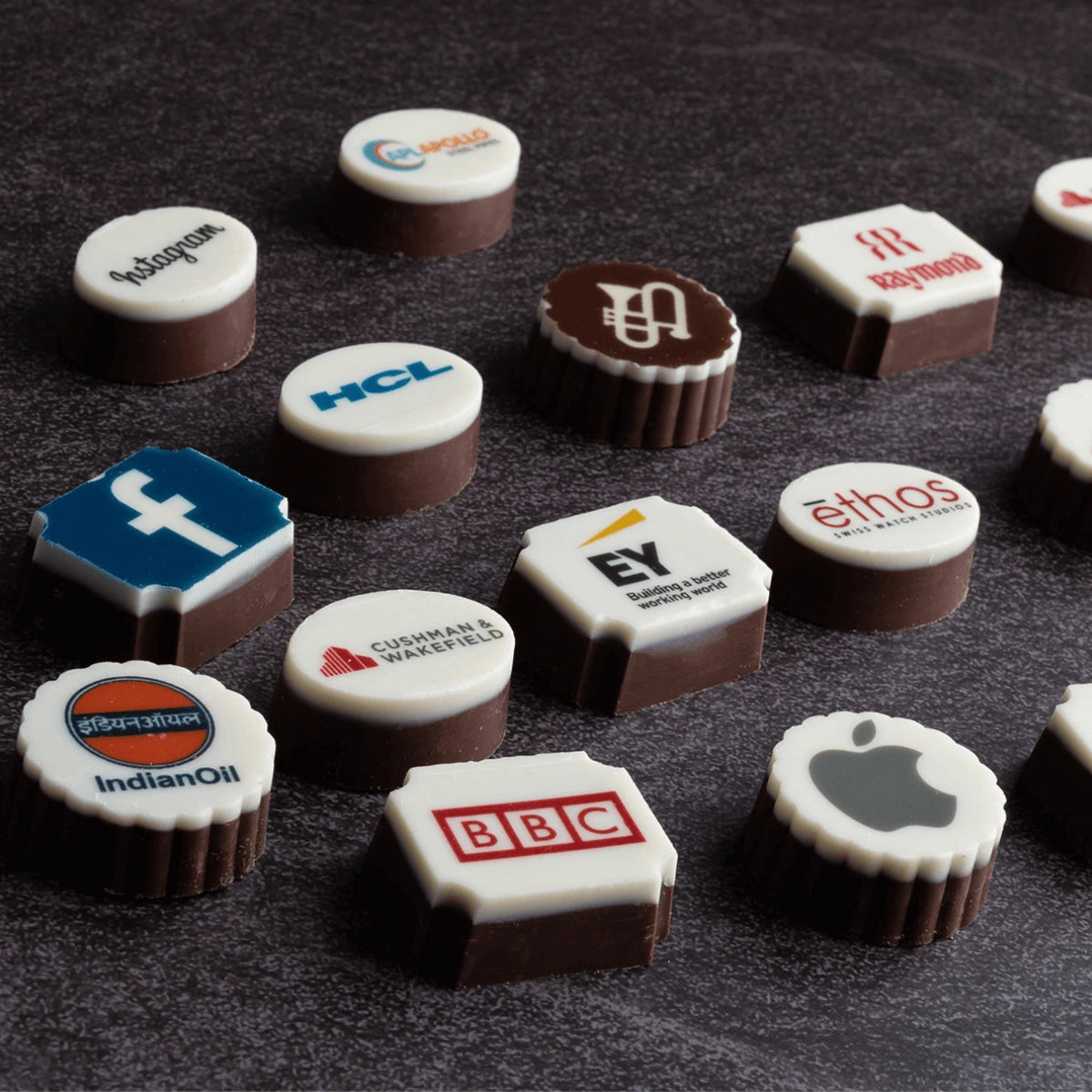
Personalized Corporate Giveaway Chocolates
Custom-branded chocolate giveaway gifts designed to boost visibility at exhibitions and corporate events.
Customize for Your BrandTrends Shaping Trade Show Goals in the USA
Trade shows are evolving rapidly, and exhibitor objectives are evolving alongside them.
- Experience-first booths replacing pitch-heavy layouts
- Data-light lead capture driven by privacy concerns
- QR-enabled physical giveaways bridging offline and online
- Long-term attribution models replacing last-touch ROI
According to insights shared by McKinsey’s B2B research, modern buyers prefer self-directed journeys, using trade shows as trust checkpoints rather than buying moments.
As a result, premium giveaways increasingly function as brand signals. Material quality, personalization, and presentation communicate credibility faster than words.
Budget-friendly giveaway gifts can still feel premium when chosen strategically—focus on usefulness over quantity. Read more →
Conclusion: Choosing the Right Trade Show Goal Is a Competitive Advantage
Trade shows aren’t failing—unclear goals are.
When exhibitors walk in knowing whether they are building brand awareness, generating leads, or intentionally balancing both, execution improves across the board.
- Booth engagement feels natural
- Teams operate with confidence
- Giveaways reinforce strategy
- ROI becomes easier to measure
For buyers of corporate giveaway gifts, clarity is critical. The right giveaway does more than attract attention—it supports trade show goals long after the event ends.
If you are exhibiting in the USA this year, start with the question most companies skip: what do you want attendees to remember or do after they leave your booth?
Answer that, and the rest falls into place.

Mini Coupon Box as Giveaway
📦 Box: Logo + “Here’s a Deal”
📝 Message Inside: Coupon code — “Use this for 20% off today only”
🍫 Chocolates: One with “20% OFF”, one with “Special Offer” or logo
🎯 Purpose: Converts booth visitors into instant buyers by creating urgency and measurable online sales.
Make it for your BrandKey Information
| Focus Area | Brand Awareness–Led Strategy | Lead Generation–Led Strategy |
|---|---|---|
| Primary Goal | Increase recall and visibility | Capture and qualify prospects |
| Ideal Audience | Early-stage buyers, researchers | Decision-makers, buyers with intent |
| Booth Experience | Open, engaging, conversational | Structured, qualification-driven |
| Giveaway Approach | Premium, memorable, ungated | Tiered, value-based, gated |
| Success Metrics | Recall, inbound interest, mentions | Leads, SALs, meetings booked |
| Sales Cycle Fit | Long, complex B2B cycles | Shorter or transactional cycles |
| Best Use Case | New markets or category building | Niche shows with clear intent |
FAQs
1. What should my main trade show goal be—brand awareness or lead generation?
Your main trade show goal depends on your audience, brand maturity, and sales cycle. If you’re entering a new market or selling a complex B2B product, brand awareness often delivers better long-term ROI. If you’re exhibiting at a niche trade show with high buyer intent, lead generation may be more effective. The key is choosing one primary goal and aligning everything around it.
2. Are trade shows better for branding or for generating leads?
Trade shows can support both, but they rarely do both equally well at the same time. Branding-focused trade show strategies build trust, familiarity, and recall, which later improves conversions. Lead-focused strategies work best when attendee intent is high. The strongest trade show marketing strategies intentionally prioritize one goal while supporting the other as a secondary outcome.
3. How do I measure success if my goal is brand awareness?
Brand awareness at trade shows is measured through indicators like booth traffic quality, post-event inbound inquiries, brand recall surveys, website traffic spikes, and sales conversations referencing the event. These metrics take longer to materialize than leads but often influence pipeline value and close rates over time, especially in longer B2B sales cycles.
4. How many leads should I expect from a trade show?
There’s no universal benchmark because lead volume depends on show size, audience quality, and your exhibitor objectives. A better question is how many qualified leads you need. Many US exhibitors find that fewer, well-qualified leads outperform high volumes of unqualified contacts when trade show goals and giveaway strategies are properly aligned.
5. Do giveaways really impact trade show ROI?
Yes—giveaways strongly influence booth engagement, memory, and post-event recall. However, not all giveaways perform equally. Generic swag often drives foot traffic without impact, while premium, customized giveaways create emotional connection and brand recall. When aligned with trade show goals, giveaways become a strategic tool rather than just a cost line item.
6. Should I gate giveaways behind lead capture?
Gating works well when lead generation is your primary goal and your audience has buying intent. For brand awareness, ungated premium giveaways usually perform better by maximizing reach and recall. Many exhibitors succeed with a hybrid approach—offering small gifts freely and reserving premium giveaways for qualified conversations.
7. What is a hybrid trade show strategy, and why does it work?
A hybrid trade show strategy prioritizes one main objective—brand awareness or lead generation—while intentionally supporting the other. This approach works because it prevents mixed messaging while still capturing secondary value. Hybrid strategies are especially effective for US exhibitors balancing marketing visibility with sales accountability.
8. How do I align my booth team with the right trade show goal?
Alignment starts with clarity. Your team should know whether their job is to educate, engage, or qualify. Provide simple scripts, qualification criteria, and clear guidance on when to offer premium giveaways. When teams understand the goal, interactions feel more natural and results become more consistent.
9. Are premium giveaways worth the higher cost at trade shows?
Premium giveaways often deliver higher ROI than cheap alternatives because they increase memorability, perceived brand value, and post-event recall. In many cases, fewer high-quality giveaways outperform thousands of forgettable items—especially when trade show goals focus on long-term brand building or high-value B2B relationships.
10. How early should I define trade show goals in the planning process?
Trade show goals should be defined at the very beginning of planning—before booth design, budgeting, or giveaway selection. Early clarity ensures that every decision supports the same objective, reduces wasted spend, and improves both execution and measurement. Clear goals are the foundation of any successful trade show marketing strategy.
