

Trade Show Planning Timeline: What to Do 90 Days Before an Expo (And Why Most Exhibitors Get It Wrong)

Trade Show Planning Timeline: What to Do 90 Days Before an Expo (And Why Most Exhibitors Get It Wrong)
Explore Giveaway GiftsKey Takeaways
-
Trade show success is decided long before event day
Exhibitors who follow a structured 90-day trade show planning timeline consistently outperform those who rely on last-minute preparation. -
Early planning directly improves ROI
Locking booth design, messaging, and corporate giveaway gifts 60–90 days in advance leads to better engagement, lower costs, and stronger brand recall. -
Giveaways work best when planned strategically, not tactically
Premium, customized, and consumable gifts selected early outperform generic swag chosen late. -
Alignment between sales, marketing, and operations is non-negotiable
A shared planning timeline prevents miscommunication, improves lead quality, and ensures smoother execution on the show floor. -
A repeatable timeline turns trade shows into predictable growth channels
Treating exhibitions like campaigns—not one-off events—creates consistency, scalability, and long-term returns.
Trade shows rarely fail on the event day itself. They fail quietly weeks before the show floor opens—through rushed decisions, unclear objectives, missed deadlines, and last-minute compromises. In the highly competitive U.S. exhibition ecosystem, where booth space, logistics, staffing, and travel represent a serious investment, a structured trade show planning timeline is not optional. It is the foundation of return on investment.
Brands that generate qualified leads, meaningful conversations, and long-term brand recall do not simply “prepare” for trade shows. They plan with intention. They know what must be completed 90 days before the event, what should be locked by the 60-day mark, and what should never be left to the final month. From booth design and messaging to corporate giveaway gifts for exhibitions that actually get remembered, timing directly influences outcomes.
This event planning guide outlines a proven trade show preparation timeline for USA exhibitors, based on real-world exhibition best practices. Whether you are exhibiting for the first time or refining a repeatable framework across multiple trade shows, this timeline will help you move from reactive execution to confident, high-ROI planning.
High-ROI giveaway gifts balance cost with long-term usage, ensuring your brand stays visible after the event ends. Read more →
Why a Trade Show Planning Timeline Matters More in the USA
The United States hosts thousands of trade shows and exhibitions every year across industries such as technology, healthcare, manufacturing, finance, retail, and professional services. According to market research published by Statista, the U.S. remains one of the largest and most competitive exhibition markets globally.
This density creates a unique challenge for exhibitors. Attendees are exposed to hundreds of booths, demos, brochures, and giveaways in a single day. Brands that do not plan early often blend into the background, even when they spend heavily on booth space and sponsorships.
A clear exhibition planning schedule allows companies to allocate budget more intelligently, align internal teams, and focus on engagement rather than scrambling with logistics. It also provides the breathing room required to design thoughtful experiences instead of defaulting to generic solutions.
Experienced U.S. exhibitors treat trade shows like campaigns rather than calendar events. Their planning resembles a product launch, complete with milestones, vendor lock-ins, review checkpoints, and contingency buffers. This disciplined approach consistently results in stronger booth conversations and higher-quality leads.
Corporate Giveaway Gifts for Expo, Exhibition & Trade Shows
Attract attention and drive brand recall with premium corporate giveaway gifts featuring personalized chocolate branding for expos and trade shows.
Explore Giveaway Gifts NowThe Core Problem: Why Most Exhibitors Miss Trade Show ROI
Despite careful budgeting and months of anticipation, many companies walk away from trade shows asking the same question: “Why didn’t this convert better?” In most cases, the problem is not the show itself. It is planning compression.
Without a structured trade show preparation timeline, teams default to urgency instead of strategy. Booth graphics are finalized late. Messaging becomes cluttered. Sales teams receive rushed briefings. Giveaways are selected based on availability rather than intent.
This breakdown has a direct impact on corporate giveaways. When chosen at the last minute, brands tend to select low-cost, low-impact items that are easy to order but easy to forget. Customization is limited or removed. Packaging feels generic. Distribution lacks purpose.
By contrast, exhibitors who commit to giveaway strategy 60–90 days in advance are able to align gift value with lead value, personalize messaging, and integrate gifting into the booth experience rather than treating it as an afterthought.
The 90-Day Trade Show Planning Framework
High-performing exhibitors typically divide their planning into four clear phases. This structure ensures that decisions build on each other instead of being made in isolation.
- 90–75 Days Before the Event: Strategic foundation and goal setting
- 74–45 Days Before the Event: Booth design, messaging, and giveaway commitment
- 44–15 Days Before the Event: Team training, logistics, and execution readiness
- 14 Days to Event Day: Precision execution and on-site optimization
This article focuses on the most overlooked—and most critical—portion of the timeline: the first 90 days. What you decide here determines how effective every later action will be.
Phase 1: 90–75 Days Before the Trade Show – Strategic Foundation
The 90-day mark is where successful trade shows are truly won or lost. At this stage, strong exhibitors stop thinking tactically and start thinking strategically.
The first priority is defining a clear primary objective. Is the goal to generate qualified leads, increase brand awareness, build partnerships, or support account-based selling? Attempting to pursue every objective at once usually leads to diluted messaging and poor execution.
Next comes audience definition. Understanding who you want to attract—job titles, industries, company size, and buying stage—guides booth design, staff training, and giveaway selection. A booth designed for senior decision-makers looks very different from one designed for general foot traffic.
Budget allocation should also be finalized during this phase. Instead of allocating most of the budget to booth size alone, experienced exhibitors distribute spend across engagement drivers such as staff training, lead capture tools, and corporate gifting.
Giveaway strategy begins here, not later. Many brands now favor premium, consumable, customized items—such as printed chocolates—because they signal quality and intention. When selected early, these gifts can be aligned with brand positioning and used selectively for meaningful conversations rather than mass handouts.
Internal alignment is critical at this stage. Sales and marketing teams must agree on lead qualification criteria, follow-up ownership, and success metrics. This alignment prevents confusion later and ensures the entire team is working toward the same outcome.
Stand out from competitors by choosing unique giveaway gifts that go beyond standard pens and notebooks. Read more →
Setting the Foundation for the Next Phase
By the end of the 90–75 day window, high-performing exhibitors have clarity. They know why they are attending the show, who they want to engage, how success will be measured, and what role giveaways will play in the experience.
This strategic foundation sets the stage for the next phase of the trade show planning timeline, where ideas turn into tangible assets: booth design, messaging, and committed production decisions. Without this groundwork, even the most creative execution struggles to deliver results.
Once the strategic foundation is set, the second half of the trade show planning timeline is about commitment, discipline, and execution. This is where many exhibitors lose momentum—or lose control. For companies exhibiting in the U.S., where logistics are complex and attendee expectations are high, the difference between success and frustration often lies in how well this phase is managed.
This section of the event planning guide covers what must happen from approximately 74 days before the trade show through event day itself, including booth execution, team readiness, giveaway distribution, and real-time decision-making.
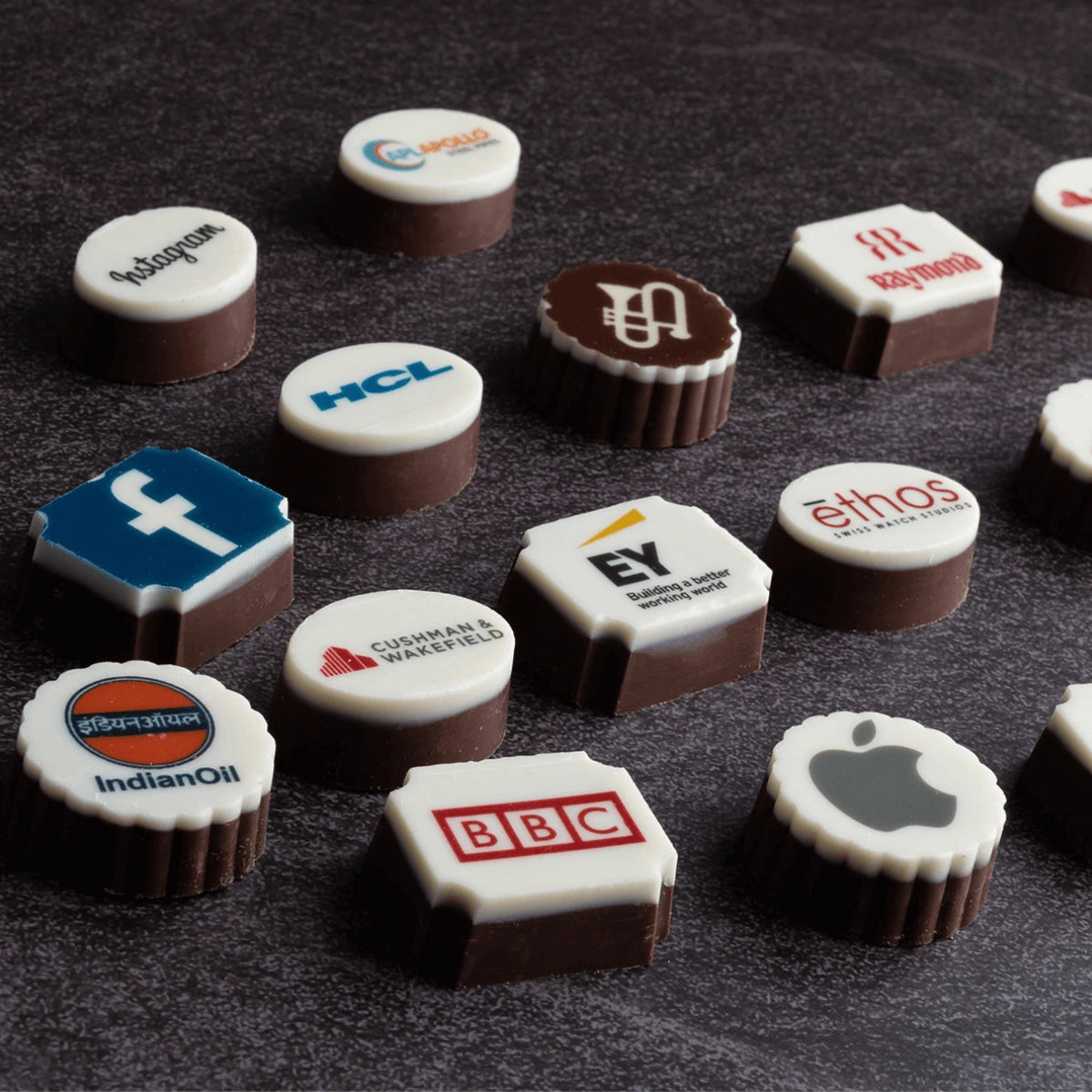
Personalized Corporate Giveaway Chocolates
Custom-branded chocolate giveaway gifts designed to boost visibility at exhibitions and corporate events.
Customize for Your BrandPhase 2: 74–45 Days Before the Trade Show – Design, Commitment, and Clarity
This phase marks the point of no return. Strategic ideas must now be converted into tangible assets that will define the on-site experience. Any indecision here creates downstream risk.
Booth design and layout should be finalized during this window. This includes booth graphics, signage hierarchy, demo areas, storage placement, and visitor flow. A strong booth does not attempt to communicate everything. Instead, it communicates one clear value proposition quickly.
As outlined in how to plan a successful trade show booth in the USA , clarity consistently outperforms complexity on the show floor. Attendees decide within seconds whether to stop or walk past.
This is also the final safe window to commit to corporate giveaway gifts. Waiting beyond this phase often limits customization options and introduces rush costs. Industry insights published by Fast Company show that experiential and consumable giveaways drive stronger emotional recall than utilitarian swag.
As a result, many U.S. exhibitors choose customized, premium chocolate gifts during this stage. Selecting them early allows time for branding, packaging design, approvals, and quality checks—ensuring the gift enhances brand perception rather than undermining it.
Phase 3: 44–30 Days Before the Trade Show – Team Readiness and Operational Lock-In
As the event approaches, the focus shifts from planning to preparedness. Every unresolved detail at this stage becomes a potential on-site issue.
Staff training is a top priority. Booth teams should understand the brand story, ideal customer profile, qualification criteria, and how giveaways fit into conversation flow. According to Harvard Business Review, teams trained on intent-based engagement consistently outperform those focused purely on volume.
Resources such as how to prepare your team for a trade show provide practical frameworks for aligning sales, marketing, and support staff.
Logistics should also be locked in during this phase. Shipping deadlines, venue regulations, material handling rules, and insurance requirements must be confirmed. Inventory counts for giveaways should include buffer stock to account for unexpected demand or damage.
This is especially important for food-based giveaways, where freshness, packaging integrity, and presentation directly impact brand perception.
Phase 4: 29–15 Days Before the Trade Show – Execution Readiness and Risk Reduction
In the final month, the goal is not improvement—it is stability. Changes made during this phase often create more problems than they solve.
All booth materials should be in production or in transit. Lead capture tools must be tested. Staff schedules should be finalized. Contingency plans should be documented.
Many exhibitors rely on structured checklists such as the trade show checklist for first-time exhibitors to ensure no critical detail is overlooked.
Giveaway distribution rules should be clearly defined by now. High-performing booths do not hand out gifts randomly. They reserve premium items for qualified leads, decision-makers, partners, and meaningful conversations.

Call to Action - Chocolate Box
📦 Box: Logo + bold CTA — “Become Our Distributor” / “Partner With Us”
📝 Message Inside: Contact details + QR code to sales deck or lead form
🍫 Chocolates: One with “Let’s Partner”, one with logo
🎯 Purpose: Turns a premium gift into a partnership trigger—driving real business inquiries, not just brand recall.
Make it for your BrandEvent Week and Event Day – Precision, Presence, and Performance
Event week is about execution, not experimentation. Successful exhibitors arrive with a clear plan and the flexibility to make small, informed adjustments.
On the show floor, staff should focus on engagement quality rather than traffic volume. Giveaways work best as conversation closers or relationship builders, not as bait. Premium gifts are most effective when they reinforce value already established through dialogue.
Many exhibitors use tiered gifting strategies during the event, offering more substantial gifts to high-intent prospects while reserving lighter items for general engagement. This approach protects budget while maximizing perceived value.
Custom-branded giveaway gifts improve recall—your logo should feel integrated, not forced, into the product design. Read more →
Data, Research, and Industry Insight
Research from Statista consistently shows that while exhibitors spend heavily on booth space and travel, engagement quality is the primary driver of trade show ROI. McKinsey Quarterly further notes that experiential touchpoints significantly increase brand recall compared to passive impressions.
These insights reinforce a simple truth: trade show success is rarely about doing more. It is about doing the right things earlier and executing them consistently.
Conclusion: The Timeline Is the Strategy
A disciplined trade show planning timeline transforms uncertainty into confidence. It allows teams to make better decisions, choose higher-impact giveaways, and execute with clarity under pressure.
In the competitive U.S. exhibition landscape, respecting the timeline is not merely a best practice. It is a requirement. The exhibitors who plan early, commit intentionally, and execute precisely are the ones who consistently turn trade shows into measurable business growth.

Mini Coupon Box as Giveaway
📦 Box: Logo + “Here’s a Deal”
📝 Message Inside: Coupon code — “Use this for 20% off today only”
🍫 Chocolates: One with “20% OFF”, one with “Special Offer” or logo
🎯 Purpose: Converts booth visitors into instant buyers by creating urgency and measurable online sales.
Make it for your BrandKey Information
| Timeline Phase | What to Focus On | Why It Matters |
|---|---|---|
| 90–75 Days Before | Define goals, target audience, and budget allocation | Sets strategic direction and prevents scattered execution |
| 74–45 Days Before | Finalize booth design, messaging, and giveaway strategy | Ensures brand clarity and enables full customization |
| 44–30 Days Before | Staff training and lead qualification planning | Improves conversation quality and lead relevance |
| 29–15 Days Before | Confirm logistics, shipping, and inventory buffers | Reduces risk, delays, and last-minute costs |
| Event Week | Precision execution and intentional giveaway distribution | Maximizes engagement and protects brand perception |
| Post-Event (Optional) | Follow-up planning and lead nurturing | Converts trade show interactions into revenue |
| Ongoing | Refine timeline for future events | Builds a repeatable, high-ROI exhibition framework |
FAQs
1. When should I start planning for a trade show in the USA?
Ideally, you should start planning at least 90 days before the trade show. This allows enough time to define goals, finalize your exhibition planning schedule, design the booth, train your team, and choose the right corporate giveaway gifts. Early planning reduces last-minute costs and significantly improves engagement and ROI on the show floor.
2. What is a realistic trade show planning timeline for exhibitors?
A practical trade show preparation timeline is broken into phases: 90–75 days for strategy, 74–45 days for booth design and giveaways, 44–15 days for training and logistics, and the final two weeks for execution. This structured approach ensures nothing critical is rushed and helps teams stay aligned throughout the process.
3. Why do many companies fail to get ROI from trade shows?
Most exhibitors miss ROI because planning starts too late. When decisions around messaging, booth design, or giveaways are rushed, execution suffers. Without a clear event planning guide, teams focus on logistics instead of engagement, resulting in low-quality leads and poor post-event conversions.
4. How important are corporate giveaways in trade show success?
Corporate giveaway gifts play a major role in booth engagement and brand recall. When planned early, giveaways can support meaningful conversations instead of being random handouts. Premium, customized, and consumable items often perform better than generic swag because they create a stronger emotional connection with prospects.
5. What should be finalized first in a trade show planning timeline?
The first things to finalize are your primary objective, target audience, and budget allocation. These decisions influence every other element, including booth design, staffing, and giveaway selection. Without clarity at this stage, even a well-designed booth may fail to attract the right prospects.
6. How far in advance should trade show giveaways be ordered?
Giveaways should ideally be finalized and ordered 60–90 days before the event. This allows time for customization, quality checks, and packaging design. Ordering early also gives you more flexibility to choose high-impact items rather than settling for what’s available at the last minute.
7. How can I align my sales and marketing teams for a trade show?
Alignment starts early in the exhibition planning schedule. Sales and marketing should agree on lead qualification criteria, messaging, and follow-up ownership before the event. When both teams work from the same trade show preparation timeline, booth conversations become more focused and post-event follow-ups more effective.
8. What should booth staff be trained on before the event?
Booth staff should be trained on your value proposition, ideal customer profile, conversation flow, and how giveaways fit into engagement. Training should also cover lead capture tools and qualification questions. Well-prepared teams create better conversations and make more intentional use of corporate giveaway gifts.
9. Is it better to focus on footfall or engagement quality at trade shows?
Engagement quality matters far more than footfall. High traffic without relevance rarely converts. A structured trade show planning timeline helps teams focus on attracting the right audience, having meaningful conversations, and using giveaways strategically to reinforce value rather than simply increasing booth traffic.
10. Can a trade show planning timeline be reused for future events?
Yes, and it should be. A well-documented event planning guide becomes a repeatable framework for future exhibitions. By refining the same trade show planning timeline after each event, companies reduce planning effort, improve consistency, and turn trade shows into a predictable, scalable growth channel.
