

The Ultimate Trade Show Checklist for First-Time Exhibitors (USA Edition)

The Ultimate Trade Show Checklist for First-Time Exhibitors (USA Edition)
Explore Giveaway GiftsKey Takeaways
-
Early planning determines trade show ROI
First-time exhibitors who plan 60–90 days in advance avoid rushed decisions, hidden costs, and missed engagement opportunities. -
A structured checklist prevents expensive mistakes
Using a trade show checklist ensures booth design, logistics, staffing, lead capture, and giveaways work together—not in silos. -
Experience matters more than booth size
Attendees remember clear messaging, trained staff, and meaningful interactions—not the largest booth on the floor. -
Giveaways should support conversations, not replace them
Premium, well-timed corporate gifts outperform mass swag when used as post-qualification or follow-up tools. -
Success is measured after the event, not during it
Lead quality, follow-up speed, and brand recall are stronger indicators of trade show success than footfall alone.
Your first trade show can either become a defining growth milestone or an expensive learning curve that delivers little return.
For many brands exhibiting in the United States for the first time, trade shows promise visibility, qualified leads, partnerships, and instant credibility. Yet behind the polished booths, energetic demos, and busy aisles lies a complex operation involving logistics, timelines, budgets, staffing, compliance rules, and marketing decisions. When even one element is overlooked, the entire exhibition experience can suffer.
That is exactly why a trade show checklist for first-time exhibitors is not optional. It is foundational.
This guide is designed specifically for companies preparing to exhibit at US trade shows, expos, and industry exhibitions. It captures what experienced exhibitors have learned through trial and error but rarely document clearly: how early to plan, which decisions matter most, where first-timers lose money, and how small details—such as the right booth giveaways—can significantly influence lead quality and long-term brand recall.
Whether you are exhibiting at a B2B conference, industry expo, or large-scale exhibition, this exhibition planning checklist helps you stay organized, confident, and ROI-focused without feeling overwhelmed.
If you are already considering corporate giveaway gifts for exhibitions such as premium, customized chocolates that leave a lasting impression, this checklist will show you exactly where they fit within a smart trade show preparation strategy.
High-ROI giveaway gifts balance cost with long-term usage, ensuring your brand stays visible after the event ends. Read more →
Why First-Time Exhibitors Struggle
Trade shows in the USA represent a significant financial and operational commitment. According to research from the Center for Exhibition Industry Research (CEIR), companies consistently allocate a major portion of their marketing budgets to in-person events. Despite this investment, many first-time exhibitors underestimate the complexity involved in executing a successful show.
Unlike digital campaigns that can be adjusted in real time, exhibitions demand complete physical readiness before the event doors open. This includes:
- Booth design, fabrication, and shipping
- Compliance with venue, union, and labor regulations
- Staff training and scheduling
- Lead capture systems and follow-up planning
- Pre-event and post-event marketing coordination
- On-site engagement tools such as booth giveaways
First-time exhibitors often devote disproportionate attention to booth aesthetics while overlooking planning fundamentals like timelines, logistics, and attendee experience. This imbalance leads to rushed decisions, unexpected expenses, and weak lead conversion.
Another overlooked challenge is the US trade show ecosystem itself. Rules around drayage, electrical services, labor usage, and shipping vary by venue and city. Without a proper trade show preparation checklist, many first-time exhibitors encounter hidden costs and last-minute constraints that disrupt execution.
The good news is that nearly all of these challenges are predictable. With structured planning and a proven framework, they are also preventable.
A clear first-time exhibitor guide transforms uncertainty into structure and helps ensure your first exhibition builds momentum instead of stress.
Corporate Giveaway Gifts for Expo, Exhibition & Trade Shows
Attract attention and drive brand recall with premium corporate giveaway gifts featuring personalized chocolate branding for expos and trade shows.
Explore Giveaway Gifts NowCore Problem & Opportunity for First-Time Exhibitors
The Core Problem: Too Many Decisions, Too Little Time
First-time exhibitors face a unique paradox. Trade shows feel distant during early planning stages, yet suddenly become urgent as deadlines approach.
Planning is often delayed because the event date feels far away, internal approvals take longer than expected, and booth or giveaway decisions are mentally categorized as “later-stage” tasks.
When urgency finally hits, suppliers are fully booked, shipping timelines tighten, and strategic thinking gives way to reactive problem-solving.
The most common consequences include:
- Generic booths that blend into the exhibition floor
- Last-minute giveaways that lack brand alignment
- Booth staff who are unclear on messaging or goals
- Weak or inconsistent lead capture processes
- Missed or delayed post-event follow-ups
The Opportunity: First-Time Exhibitors Can Win Big
Here is the overlooked truth: first-time exhibitors often have a strategic advantage.
New exhibitors are perceived as fresh and interesting. Attendees are naturally more curious. Expectations may be lower, but impressions last longer.
With a structured trade show checklist USA, first-time exhibitors can outperform seasoned brands by focusing on clarity, preparation, and experience rather than scale.
Simple but intentional choices—such as selecting premium, customized giveaway gifts instead of forgettable swag—can dramatically increase booth engagement and post-event recall.
Trade shows are not about having the biggest booth. They are about being the most memorable.
Key Pillars of a Smart Trade Show Checklist
1. Strategic Goal Setting Before Anything Else
Before booking vendors or designing booths, first-time exhibitors must define clear objectives. Are you prioritizing brand awareness, qualified leads, partnerships, or product education? Who exactly are you trying to attract, and what should success look like after the event?
Clear goals shape every downstream decision—from booth layout and messaging to staffing levels and giveaway quantities.
Related reading: Trade Show Goals: Brand Awareness vs Lead Generation
2. Timeline-Driven Planning Using the 90-Day Framework
Experienced exhibitors plan backward from the event date. A structured timeline prevents last-minute chaos and cost overruns.
Related reading: Trade Show Planning Timeline: 90 Days Before to Event Day
3. Booth Experience Design, Not Just Booth Design
Your booth is not a static billboard. It is a live brand experience. Attendees should understand your value proposition within seconds and feel invited to engage.
High-performing booths use clear messaging, open layouts, interactive elements, and conversation-driven giveaways.
Premium customized chocolates work particularly well because they create a moment of delight while reinforcing brand positioning.
4. Budget Allocation That Reflects Reality
Hidden costs such as drayage, electrical hookups, labor, storage, and rush shipping frequently surprise first-time exhibitors.
Related reading: Trade Show Budget Breakdown: Where Companies Actually Spend
5. Team Readiness and On-Booth Execution
Even the most visually appealing booth fails if the team is not prepared. Staff must understand messaging, lead qualification criteria, and follow-up ownership.
Related reading: How to Prepare Your Team for a Trade Show
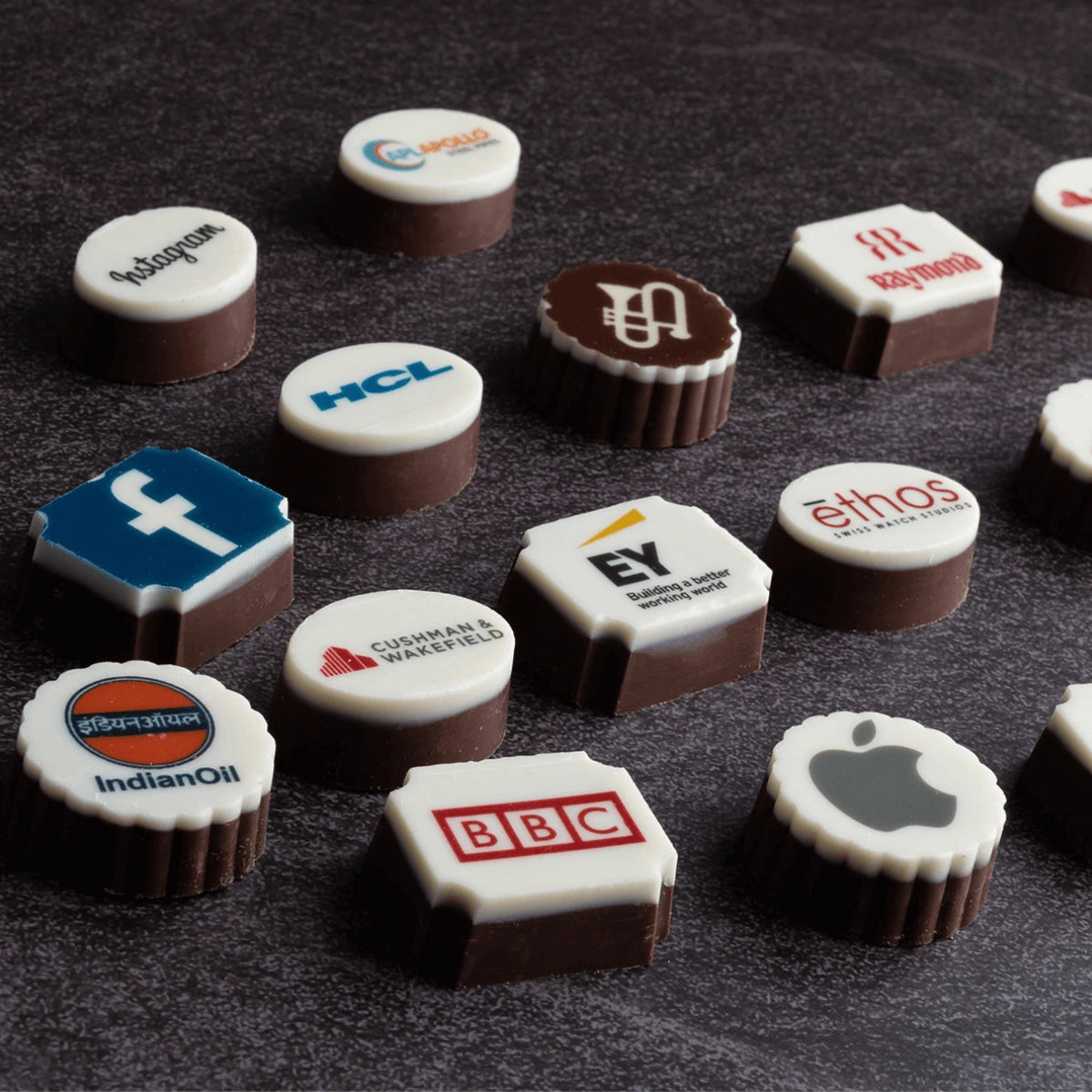
Personalized Corporate Giveaway Chocolates
Custom-branded chocolate giveaway gifts designed to boost visibility at exhibitions and corporate events.
Customize for Your BrandData, Research & What Successful Exhibitors Do Differently
Although trade shows appear creative and experiential on the surface, the most successful exhibitors treat them as structured, data-driven investments.
Research from the Center for Exhibition Industry Research (CEIR) consistently shows that in-person events outperform many digital channels when it comes to high-quality B2B lead generation. Attendees who interact physically with a brand are more likely to remember it and more likely to engage with post-event follow-ups.
Business publications such as Harvard Business Review have documented how physical interaction builds emotional memory and trust, especially in high-consideration purchase environments.
This explains why experienced exhibitors focus less on quantity and more on memorability. A thoughtful conversation combined with a meaningful takeaway often outperforms mass lead collection.
Stand out from competitors by choosing unique giveaway gifts that go beyond standard pens and notebooks. Read more →
Practical How-To: A Step-by-Step Trade Show Checklist
Pre-Event Preparation (60–90 Days Out)
- Define clear exhibition goals and KPIs
- Confirm booth size, layout, and venue regulations
- Finalize booth messaging and visual hierarchy
- Select corporate giveaway gifts aligned with brand value
- Set up lead capture and CRM integration
- Book logistics and shipping early
Related reading: How to Choose the Right Trade Show for Your Industry
Mid-Preparation Phase (30–45 Days Out)
This stage is when most successful exhibitors finalize their giveaway strategy. For decision-maker audiences, fewer premium gifts often perform better than high volumes of generic items.
Thoughtfully branded chocolate gift boxes provide an ideal balance of approachability and perceived value. Depending on your audience size and qualification criteria, formats can include 2-chocolate gift boxes, 4-chocolate gift boxes, 6-chocolate gift boxes, 9-chocolate gift boxes, and 12-chocolate gift boxes.
Event Days
During the event, execution matters more than perfection. Arrive early, observe attendee flow, and adjust staffing accordingly.
Keep premium giveaways behind the counter to encourage conversation. Rotate staff to maintain energy, and take brief notes after meaningful discussions to improve follow-up quality.
Post-Event Follow-Up
Within 72 hours of the event, segment leads based on intent and engagement level. Timely, personalized follow-up significantly improves conversion rates.
Related reading: Trade Show KPIs Every Exhibitor Should Track

Call to Action - Chocolate Box
📦 Box: Logo + bold CTA — “Become Our Distributor” / “Partner With Us”
📝 Message Inside: Contact details + QR code to sales deck or lead form
🍫 Chocolates: One with “Let’s Partner”, one with logo
🎯 Purpose: Turns a premium gift into a partnership trigger—driving real business inquiries, not just brand recall.
Make it for your BrandCommon First-Time Exhibitor Mistakes and How to Avoid Them
First-time exhibitors frequently make avoidable mistakes that reduce ROI.
Ordering giveaways too late limits customization options and increases costs. Treating giveaways as free handouts reduces their strategic impact. Measuring success only by booth traffic ignores lead quality and brand recall.
Related reading: Trade Show Success Metrics Most Companies Ignore
Custom-branded giveaway gifts improve recall—your logo should feel integrated, not forced, into the product design. Read more →
Trends and Expert Insights
Industry experts writing in Forbes and MIT Sloan Management Review highlight a clear shift toward fewer giveaways, higher quality experiences, and stronger personalization.
For first-time exhibitors, this trend is encouraging. You do not need the biggest booth. You need clarity, preparation, and intentional engagement.
Conclusion
Your first trade show does not need to be overwhelming or forgettable. With a clear checklist, disciplined planning, and thoughtful execution, it can become a powerful growth channel.
Premium, customized corporate gifts—used strategically—extend the impact of your booth beyond the event floor.
Explore curated corporate gifting solutions designed specifically for exhibitions and trade shows.
A trade show lasts a few days. A strong impression lasts far longer.

Mini Coupon Box as Giveaway
📦 Box: Logo + “Here’s a Deal”
📝 Message Inside: Coupon code — “Use this for 20% off today only”
🍫 Chocolates: One with “20% OFF”, one with “Special Offer” or logo
🎯 Purpose: Converts booth visitors into instant buyers by creating urgency and measurable online sales.
Make it for your BrandKey Information
| Planning Area | What First-Time Exhibitors Should Focus On | Why It Matters |
|---|---|---|
| Goal Setting | Define whether the show is for leads, brand awareness, or partnerships | Aligns booth design, staffing, and giveaway strategy |
| Timeline | Start planning 60–90 days before the event | Prevents last-minute costs and vendor limitations |
| Booth Experience | Clear messaging, open layout, and engagement points | Increases dwell time and qualified conversations |
| Giveaways | Fewer, premium, branded gifts used strategically | Improves recall and perceived brand value |
| Team Preparation | Staff training, lead qualification, and role clarity | Converts booth traffic into meaningful leads |
| Lead Capture | Simple, reliable systems with clear follow-up ownership | Ensures no high-intent leads are lost |
| Post-Event Follow-Up | Contact leads within 72 hours with personalization | Maximizes conversion and ROI from the show |
FAQs
1. What should a first-time exhibitor include in a trade show checklist?
A first-time exhibitor checklist should include goal setting, booth planning, logistics, staffing, lead capture systems, giveaway selection, and post-event follow-up. Covering timelines and budgets upfront helps avoid last-minute decisions and ensures the trade show delivers meaningful business outcomes rather than just booth traffic.
2. How early should I start planning my first trade show in the USA?
Most experienced exhibitors recommend starting trade show planning at least 60 to 90 days in advance. This gives enough time to finalize booth design, order customized giveaways, train staff, manage logistics, and secure vendors without paying higher costs for rushed execution.
3. What are the most common mistakes first-time exhibitors make?
Common mistakes include delaying planning, focusing only on booth aesthetics, choosing generic giveaways, underestimating logistics costs, and neglecting structured follow-up. These errors often reduce lead quality and ROI even when the booth appears busy during the event.
4. How do I choose the right giveaways for a trade show?
The right trade show giveaways align with your brand positioning and audience expectations. Premium, useful, or consumable gifts work better than generic swag. Giveaways should support meaningful conversations and be shared after lead qualification to reinforce brand value and recall.
5. Are expensive booths necessary for trade show success?
Expensive booths are not required for trade show success. Clear messaging, trained staff, and engaging conversations matter far more than booth size. Many first-time exhibitors achieve strong results with modest setups by focusing on experience and interaction instead of scale.
6. How can I measure whether my first trade show was successful?
Trade show success should be measured using qualified leads, follow-up response rates, meetings booked, and post-event conversions. Long-term indicators such as brand recall and engagement after the event often provide better insight than footfall alone.
7. Should giveaways be handed out freely at trade shows?
Handing out giveaways freely can reduce their perceived value. A more effective approach is to use giveaways as conversation tools or post-qualification rewards. This ensures gifts go to relevant prospects and helps create more meaningful booth interactions.
8. What role does staff training play in trade show performance?
Staff training plays a critical role in trade show performance. Well-prepared teams communicate value clearly, qualify leads effectively, and maintain consistent messaging. Even a strong booth design cannot compensate for untrained or disengaged booth staff.
9. How soon should I follow up with trade show leads?
Leads should ideally be followed up within 48 to 72 hours after the event. Timely, personalized communication keeps your brand fresh in the attendee’s mind and significantly improves response rates and conversion potential.
10. Is exhibiting at trade shows still worth it for first-time brands?
Exhibiting at trade shows is still highly valuable for first-time brands when done strategically. With clear goals, a structured checklist, and thoughtful execution, trade shows can deliver trust, visibility, qualified leads, and long-term brand impact.
