

Branding vs Utility: The Giveaway Trade-Off Explained (And How Smart Marketers Win Both)

Branding vs Utility: The Giveaway Trade-Off Explained (And How Smart Marketers Win Both)
Explore Giveaway GiftsKey Takeaways
-
The branding vs utility giveaway debate is not binary; the best-performing trade show giveaways intentionally blend both.
-
Giveaways drive ROI when they support conversations and follow-ups, not when they’re handed out indiscriminately.
-
Emotional impact and context often outperform pure functionality in brand recall.
-
Premium, experience-led gifts create stronger attribution than generic utility items.
-
Smaller quantities of high-impact giveaways typically outperform mass-distributed swag.
Introduction: Why This Trade-Off Still Trips Up Smart Marketers
Walk any trade show floor in the United States, and a familiar dilemma plays out at almost every booth. One company distributes bold, logo-heavy swag designed to maximize visibility. Another offers understated, practical items intended to quietly integrate into everyday routines. Both approaches aim to solve the same core challenge: how to remain memorable after the event ends.
This tension lies at the heart of the branding vs utility giveaways debate, and it represents one of the most consequential decisions in modern trade show marketing. The stakes are high. A poorly chosen giveaway does more than waste budget—it weakens brand perception, reduces follow-up effectiveness, and ultimately limits return on investment.
Branding-first giveaways promise impressions and exposure. Utility-first gifts promise usefulness and goodwill. Yet marketers frequently discover that neither extreme delivers the expected results on its own.
For buyers evaluating trade show swag strategy and promotional gift decisions, the real question is no longer whether to prioritize branding or usefulness. The smarter question is how much of each is needed, in what format, and at which point in the attendee journey.
This guide explains the true trade-offs behind branding versus utility, explores the psychology that shapes attendee behavior, and shows how premium, experience-led giveaways—such as personalized edible gifts—are reshaping how brands capture attention without resorting to noise.
If giveaways are a planned part of your exhibition strategy, you can explore curated options here: Giveaway Gifts for Expo, Exhibition & Trade Shows
For B2B audiences, premium giveaway gifts signal credibility and help position your brand as high-value and trustworthy. Read more →
How Giveaways Became a Branding vs Utility Debate
To understand why marketers still struggle with this decision, it helps to look at how trade show giveaways evolved.
In earlier decades, branding-first swag dominated. Tote bags, pens, lanyards, caps, and T-shirts were designed primarily to display logos. The logic was straightforward: the more often a logo appeared in public, the stronger brand recall would be. When trade shows were less crowded and attendees received fewer giveaways, this approach often worked.
As exhibitions became larger and more competitive, a shift occurred. Marketers began prioritizing utility. Power banks, notebooks, drinkware, and tech accessories gained popularity because they promised longer usage and perceived value. The assumption was that usefulness would naturally translate into appreciation and loyalty.
However, today’s trade show environment has fundamentally changed both models.
- Attendees are overwhelmed by the sheer volume of giveaways
- Booth interactions are shorter and more transactional
- Buyers are increasingly selective about what they carry home
- Sustainability, clutter, and perceived waste influence decisions
As discussed in Are Trade Show Giveaways Still Effective? , giveaways themselves are not obsolete. What has changed is the standard by which they are judged. Success is no longer about being loud or merely useful; it is about being intentional and relevant.
This shift has turned the logo vs usefulness trade-off into a contextual decision rather than a binary one. The optimal choice depends on audience type, buying stage, brand positioning, and the role the giveaway plays within a broader follow-up strategy.
The Core Problem: Why Most Trade Show Giveaways Fail to Deliver ROI
The most common mistake brands make is assuming that branding or utility alone guarantees results. In reality, both approaches fail when applied without strategy.
Where Branding-Heavy Giveaways Fall Short
- High logo visibility does not automatically translate into recall
- Over-branded items often feel promotional rather than thoughtful
- Many items are discarded before attendees leave the venue
A tote bag crowded with logos competes with dozens of identical bags from other booths. Instead of standing out, it blends into the background. Visibility becomes noise.
Where Utility-Only Giveaways Miss the Mark
- Useful items without strong brand cues lose attribution
- Recipients remember the object but forget who provided it
- Sales teams struggle to reference the gift during follow-up
A power bank used daily but disconnected from its source offers utility without marketing impact. It delivers value to the user while quietly failing the brand.
This explains why many companies experience disappointing outcomes despite generous giveaway budgets. The issue is explored in more detail in How Giveaway Gifts Impact Trade Show ROI .
The real opportunity lies between the extremes. Giveaways that trigger emotion, invite interaction, and anchor brand memory outperform both branding-only and utility-only approaches.
Corporate Giveaway Gifts for Expo, Exhibition & Trade Shows
Attract attention and drive brand recall with premium corporate giveaway gifts featuring personalized chocolate branding for expos and trade shows.
Explore Giveaway Gifts NowKey Concepts & Framework: Branding and Utility Exist on a Spectrum
A more effective way to approach trade show swag strategy is to stop viewing branding and utility as opposing forces. Instead, think of them as variables that can be adjusted depending on context.
The Giveaway Value Spectrum
Every giveaway can be evaluated across four key dimensions:
- Visibility: How clearly is the brand associated with the item?
- Retention: How long does the item remain with the recipient?
- Engagement: Does it spark conversation or interaction?
- Emotional Response: Does it feel thoughtful or transactional?
Most traditional swag scores well on only one or two of these dimensions. High-logo items emphasize visibility but lack emotional resonance. Utility items emphasize retention but often sacrifice brand clarity.
Why Emotional Utility Often Beats Physical Utility
Research in consumer psychology consistently shows that emotionally charged experiences are remembered longer than purely functional ones. This is why edible gifts, personalized items, and limited-edition formats often outperform standard utility products in recall and brand association.
A customized chocolate featuring a logo, name, or message may not last for weeks, but the experience of receiving, sharing, and consuming it creates a multi-sensory brand imprint that is difficult to replicate with generic swag.
The Conversation-Starter Effect
Another frequently overlooked factor is how giveaways function during the event itself.
- Utility items are typically taken with minimal interaction
- Experiential or premium gifts invite explanation
- Explanation leads to dialogue
- Dialogue improves lead quality and engagement
As explained in How to Use Giveaways to Start Conversations at Booths , the most effective giveaways do not simply get picked up—they create moments of connection.
Brands such as ChocoCraft occupy a strategic middle ground by combining clear branding with emotional impact through personalized chocolate gifting. These formats deliver visibility, engagement, and memorability without creating long-term clutter for recipients.
Data, Research & Real-World Signals: What Actually Drives Recall and ROI
When corporate buyers evaluate branding vs utility giveaways in the USA, decisions are often driven by habit or past experience rather than evidence. Yet available research and post-event performance data consistently show a clear pattern: memorability and contextual relevance matter more than raw usefulness when it comes to long-term return on investment.
Industry studies frequently referenced by business publications such as Harvard Business Review highlight that people are significantly more likely to remember experiences tied to emotion, novelty, or personalization than objects valued solely for function. In trade show environments, this insight becomes especially relevant because attendees are exposed to hundreds of competing messages within a short time span.
A common post-event survey outcome illustrates this clearly. Attendees often recall receiving a specific type of item—such as a power bank or notebook—but struggle to remember which company provided it. This phenomenon, sometimes described as source amnesia, erodes the marketing value of otherwise useful items.
By contrast, giveaways connected to a distinct interaction—such as a conversation, demo, or meeting—tend to anchor brand memory more effectively. This is why brands that integrate giveaways into the flow of engagement, rather than treating them as standalone freebies, consistently report stronger post-event outcomes.
These dynamics help explain why many exhibitors see disappointing results despite significant spending. As discussed in How Giveaway Gifts Impact Trade Show ROI , the giveaway itself is rarely the problem. The issue lies in how, when, and why it is used.
The key takeaway is simple but often overlooked: the giveaway is not the ROI driver. The experience surrounding the giveaway is.
From Object to Experience: Why Context Matters More Than Category
One of the most important shifts in modern trade show swag strategy is the move away from evaluating giveaways purely as objects. Increasingly, high-performing brands evaluate giveaways as experiential touchpoints.
When a giveaway is handed out without conversation, explanation, or relevance, it competes with dozens of similar items and is quickly forgotten. When the same giveaway is introduced as part of a meaningful interaction, it becomes a memory anchor.
This distinction explains why experiential formats—such as personalized items or edible gifts—often outperform both logo-heavy swag and generic utility products. The act of personalization signals effort and intent, while sensory experiences create stronger cognitive associations.
Customized chocolate gifts, for example, may not provide long-term physical utility, but they create immediate engagement. Recipients often pause, ask questions, share with colleagues, or reference the gift later. These micro-moments significantly increase brand salience.
This is also why many exhibitors now reserve premium giveaways for qualified leads rather than distributing them indiscriminately. Fewer giveaways, used more intentionally, often deliver superior results compared to mass distribution.
Budget-friendly giveaway gifts can still feel premium when chosen strategically—focus on usefulness over quantity. Read more →
Practical Framework: How to Choose the Right Branding–Utility Balance
Instead of defaulting to branding-first or utility-first giveaways, experienced exhibitors apply a structured decision framework. The following questions can guide more effective promotional gift decisions.
1. Who Is the Giveaway For?
Audience segmentation is critical. Not every booth visitor represents the same opportunity.
- General visitors and students may respond well to low-cost, functional items
- Mid-funnel prospects benefit from branded but thoughtful giveaways
- Decision-makers and high-value leads warrant premium, experience-led gifts
This principle is explored in detail in How to Choose the Right Giveaway for Your Trade Show Audience , which shows why one-size-fits-all gifting consistently underperforms.
2. What Moment Does the Giveaway Support?
Timing matters as much as format.
- Pre-conversation giveaways help attract attention
- During-conversation giveaways sustain engagement
- Post-conversation giveaways reinforce memory
Brand-heavy swag often works best before interaction, while experiential or premium gifts are most effective after value has been established.
3. Can Sales Reference It in Follow-Up?
A simple test reveals whether a giveaway supports revenue goals: can the sales team reference it naturally in a follow-up email or call?
A message such as “Hope you enjoyed the chocolates we shared at the booth” provides a warm re-entry point. Generic utility items rarely offer the same conversational leverage.
4. Does the Giveaway Reflect Brand Positioning?
Giveaways act as tangible signals of how a brand operates. Premium solutions paired with cheap utility items create cognitive dissonance. Conversely, thoughtfully designed gifts reinforce credibility and trust.
Brands seeking curated, premium options often explore structured gifting programs under Corporate Gifts , where presentation and customization are integral rather than optional.
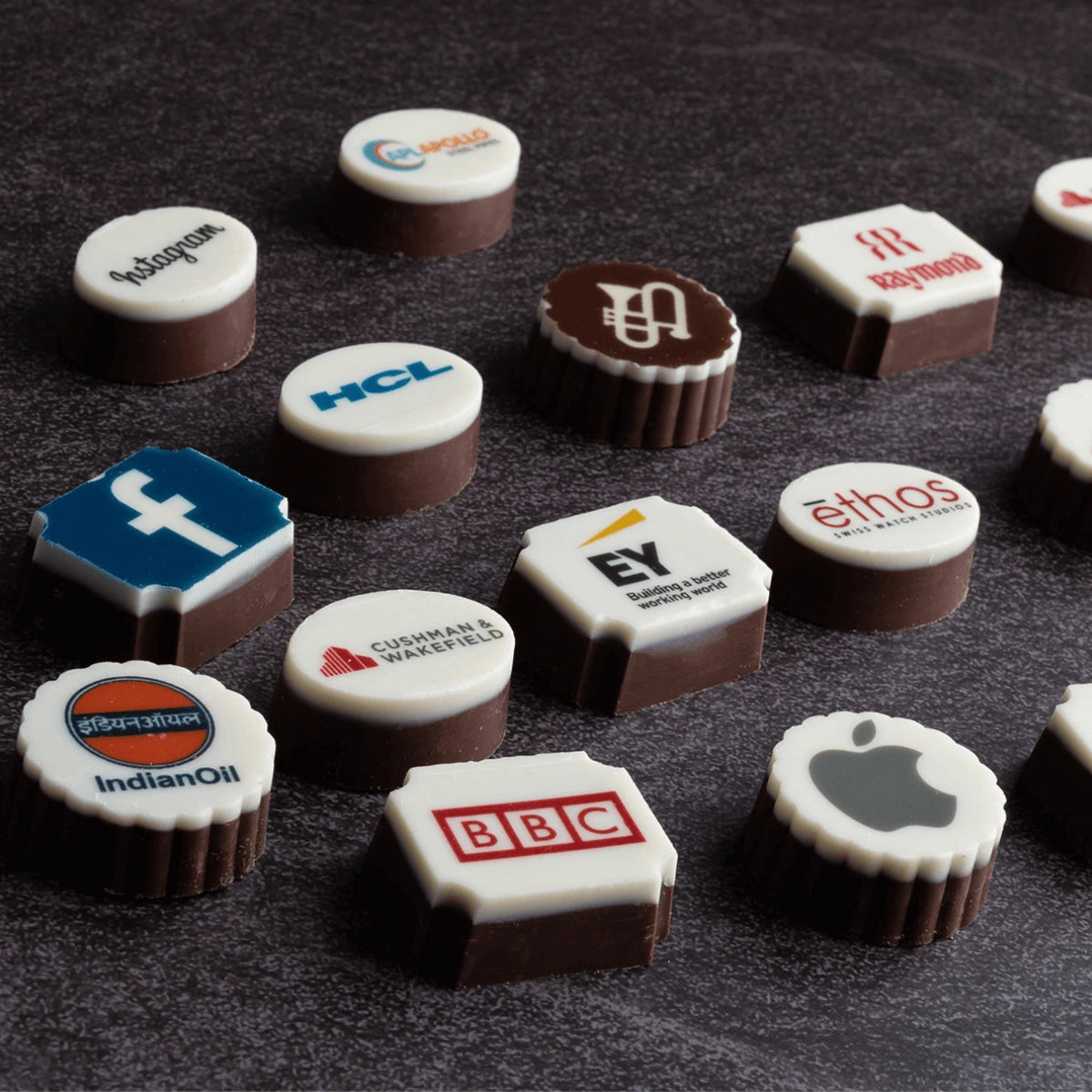
Personalized Corporate Giveaway Chocolates
Custom-branded chocolate giveaway gifts designed to boost visibility at exhibitions and corporate events.
Customize for Your BrandBudget Reality Check: Why Utility-Only Giveaways Are Not Always Cost-Effective
Utility items are often perceived as budget-friendly because of their low per-unit cost. However, this perception ignores several hidden expenses.
- Over-ordering to achieve unit price thresholds
- Logistics, storage, and transportation costs
- Leftover inventory that cannot be reused
- Opportunity cost from low recall and weak follow-up
As outlined in Giveaway Budget Optimization for Trade Shows , a smaller quantity of high-impact giveaways often delivers better cost-per-qualified-lead than mass-distributed utility items.
Edible gifts further reduce long-term waste. They are consumed rather than stored, shared rather than discarded, and remembered rather than forgotten. This aligns with growing sustainability concerns explored in Sustainable Giveaways: Do Attendees Care? .
Choose giveaway gifts that naturally attract attention at exhibitions—items that spark curiosity help drive higher booth footfall. Read more →
Compliance, Expectations, and the Modern Trade Show Environment
Another factor influencing giveaway decisions is compliance. Venue rules, industry regulations, and corporate gifting policies increasingly shape what can be distributed.
In regulated industries, giveaways must balance creativity with caution. Food items, packaging materials, and branded messaging must all align with venue and exhibitor guidelines.
For a detailed overview of these considerations, refer to Trade Show Giveaway Compliance and Venue Rules (USA) .
Compliance-conscious brands often find that premium, intentionally distributed gifts are easier to manage than high-volume giveaways that increase risk and oversight requirements.
Conclusion: The Smart Trade-Off Is Intentional, Not Binary
The branding vs utility giveaway trade-off is not about choosing sides. Branding without relevance fades quickly. Utility without attribution disappears quietly. The most effective promotional gift decisions integrate both elements with purpose.
When giveaways are aligned with audience, timing, brand positioning, and follow-up strategy, they stop being promotional clutter and start becoming strategic assets.
For exhibitors planning trade shows, expos, and corporate events, success lies in intentional design rather than default choices. Whether the format is practical, experiential, or edible, the goal remains the same: to be remembered for the right reasons, long after the event floor clears.

Call to Action - Chocolate Box
📦 Box: Logo + bold CTA — “Become Our Distributor” / “Partner With Us”
📝 Message Inside: Contact details + QR code to sales deck or lead form
🍫 Chocolates: One with “Let’s Partner”, one with logo
🎯 Purpose: Turns a premium gift into a partnership trigger—driving real business inquiries, not just brand recall.
Make it for your BrandKey Information
| Aspect | Branding-First Giveaways | Utility-First Giveaways |
|---|---|---|
| Primary Strength | High logo visibility and immediate recognition | Long-term use and perceived practical value |
| Common Risk | Feels promotional, low emotional connection | Brand attribution is often forgotten |
| Best Use Case | Pre-conversation attraction and booth visibility | Everyday usefulness for broad audiences |
| Recall Impact | Short-term recall, fades quickly | Object remembered, brand often not |
| ROI Performance | Weak without engagement or follow-up | Weak without branding cues |
| Optimal Strategy | Pair branding with interaction or experience | Add personalization or brand context |
| Smart Alternative | Experiential or premium branded gifts | Utility gifts with subtle but clear branding |
FAQs
1. What does “branding vs utility giveaways” really mean for trade shows?
It refers to choosing between logo-heavy promotional items and practical gifts attendees actually use. Branding boosts visibility, while utility boosts usage. The blog explains why combining both—through intentional design and context—delivers better brand recall, engagement, and trade show ROI.
2. Are logo-heavy giveaways still effective at trade shows in the USA?
They can be, but only in specific situations. Logo-heavy giveaways work best for initial visibility or pre-conversation attraction. Without interaction or emotional value, they’re often discarded quickly, limiting long-term brand recall and overall trade show swag strategy effectiveness.
3. Why do useful promotional gifts fail to deliver brand recall?
Many utility items lack strong brand cues or emotional connection. Attendees remember the object but forget who gave it. This “logo vs usefulness trade-off” explains why utility alone doesn’t guarantee attribution or post-event follow-up success.
4. Which type of giveaway delivers better trade show ROI?
Giveaways tied to conversations, experiences, or follow-up moments consistently outperform standalone items. The blog shows that ROI comes from how the gift is used—not whether it’s branded or useful—making strategy more important than category.
5. How should exhibitors choose between branding and utility?
Exhibitors should consider audience type, buying stage, brand positioning, and follow-up plans. Decision-makers benefit from premium, experience-led gifts, while general attendees may respond to functional items. Intentional segmentation improves promotional gift decisions.
6. Are premium giveaways worth the higher cost?
Often, yes. Premium giveaways create stronger emotional impact, better recall, and easier follow-up conversations. When distributed selectively, they can reduce waste and improve cost-per-qualified-lead compared to mass utility giveaways.
7. How do giveaways help sales teams after the event?
A good giveaway gives sales teams a natural follow-up hook. Referencing a shared experience—rather than a generic item—warms conversations, improves email response rates, and strengthens trade show lead conversion.
8. Is personalization more important than usefulness in giveaways?
Personalization significantly increases memorability and trust. Even short-lived items can outperform useful gifts if they feel thoughtful and relevant. This is why personalized or experiential giveaways often rank higher in trade show swag strategy outcomes.
9. How many giveaways should a booth plan to distribute?
More is not always better. The blog emphasizes fewer, higher-impact giveaways over mass distribution. This approach improves engagement quality, reduces budget waste, and aligns better with modern promotional gift decisions.
10. What is the biggest giveaway mistake exhibitors make?
Treating giveaways as free items instead of strategic tools. Without context, conversation, or follow-up intent, even well-designed giveaways fail to deliver ROI. Strategy—not swag—determines success.
