

Why Most Trade Show Leads Don’t Convert — And the Proven Fixes High-ROI Brands Use

Why Most Trade Show Leads Don’t Convert — And the Proven Fixes High-ROI Brands Use
Explore Giveaway GiftsKey Takeaways
-
Most trade show leads don’t convert because businesses collect contacts instead of qualifying buyer intent.
-
Poor event lead quality is usually caused by weak booth conversations, not bad attendees.
-
Memorable, premium physical touchpoints dramatically improve post-event recall and response rates.
-
Fast, personalized follow-up outperforms generic mass emails every time.
-
Aligning sales and marketing before the event is critical to fixing trade show conversion gaps.
You come back from a trade show feeling cautiously optimistic. The booth was busy. Conversations flowed. Business cards piled up. Badge scans filled your CRM. You even invested in premium giveaway gifts for expos and trade shows to make sure your brand stood out.
And then—almost nothing happens.
Follow-up emails are ignored. Calls go unanswered. Sales teams label the leads as “low quality.” Within weeks, most contacts quietly disappear into pipeline purgatory. If this sounds familiar, you’re not alone.
For many B2B marketers and sales leaders across the USA, trade shows feel like a paradox: high investment, high effort, and frustratingly low conversion. The problem isn’t that trade shows don’t work. It’s that **most companies unknowingly sabotage conversion long before the follow-up stage**.
Poor event lead quality, generic booth interactions, forgettable brand experiences, and weak post-event systems all contribute to the same outcome—leads that never turn into revenue.
In this guide, we’ll break down why trade show leads don’t convert, highlight the most common trade show sales mistakes, and outline practical lead conversion fixes that high-performing brands use to generate real ROI from exhibitions and events.
Stand out from competitors by choosing unique giveaway gifts that go beyond standard pens and notebooks. Read more →
Why Trade Shows Feel Broken
Trade shows remain one of the most resource-intensive B2B marketing channels in the USA. Booth space, design, logistics, travel, staffing, sponsorships, and promotions can quickly run into six figures. With that level of spend, expectations are understandably high.
Yet many companies walk away disappointed—not because traffic was low, but because results were.
The core issue is not lead volume. It’s **lead relevance**.
Industry research repeatedly shows that the majority of trade show attendees are in early-stage discovery mode. They’re exploring options, gathering information, and comparing vendors—not actively looking to buy. When companies mistake curiosity for intent, disappointment is inevitable.
According to insights shared by Harvard Business Review , leads lose value rapidly when follow-up is delayed or impersonal. Even strong initial interest fades when prospects feel forgotten or misunderstood.
This disconnect fuels tension between marketing and sales teams. Marketing celebrates booth traffic. Sales complains about poor event lead quality. Over time, trust erodes, and trade shows earn a reputation as “branding exercises” rather than revenue drivers.
But this outcome isn’t inevitable. It’s the result of outdated assumptions about how event leads should behave.
Corporate Giveaway Gifts for Expo, Exhibition & Trade Shows
Attract attention and drive brand recall with premium corporate giveaway gifts featuring personalized chocolate branding for expos and trade shows.
Explore Giveaway Gifts NowThe Core Problem: Why Trade Show Leads Don’t Convert
Let’s address the uncomfortable truth: **most trade show sales mistakes happen at the booth, not in the follow-up email**.
Here are the primary reasons trade show leads fail to convert:
- Contacts are captured without intent. Badge scans collect names, not buying signals.
- All leads are treated the same. Decision-makers and casual visitors receive identical follow-ups.
- Booth experiences blend together. Prospects struggle to remember who said what after the event.
- Follow-up lacks relevance. Generic messages fail to reconnect to real conversations.
- Sales and marketing aren’t aligned. Leads are passed without context or confidence.
One of the most damaging mistakes is assuming that more leads automatically mean better outcomes. In reality, lead volume without qualification often reduces conversion rates and overwhelms sales teams.
This is why understanding how many leads you should expect from a trade show is critical. When expectations are realistic, teams focus on quality instead of quantity.
Another overlooked issue is memory. Trade show floors are noisy, crowded, and overwhelming. After hours of conversations across dozens of booths, most prospects remember very little—unless something anchors the experience.
The Hidden Cost of Forgettable Booth Experiences
Most booths look similar. Same banners. Same brochures. Same giveaways. From the attendee’s perspective, everything blends together by the end of the day.
Generic swag—pens, tote bags, stress balls—rarely creates lasting recall. These items are either discarded or forgotten, taking your brand with them.
In contrast, experiences that engage multiple senses create stronger memory associations. According to MIT Sloan Management Review , physical and emotional touchpoints significantly improve brand recall.
This is why thoughtful, premium takeaways perform better than mass giveaways. When a prospect receives something unexpected, personal, and enjoyable—such as a customized chocolate gift presented in refined packaging—the interaction feels intentional rather than transactional.
The goal isn’t gifting for the sake of gifting. It’s creating a **recall trigger** that reactivates the booth conversation days later, when follow-up emails arrive.
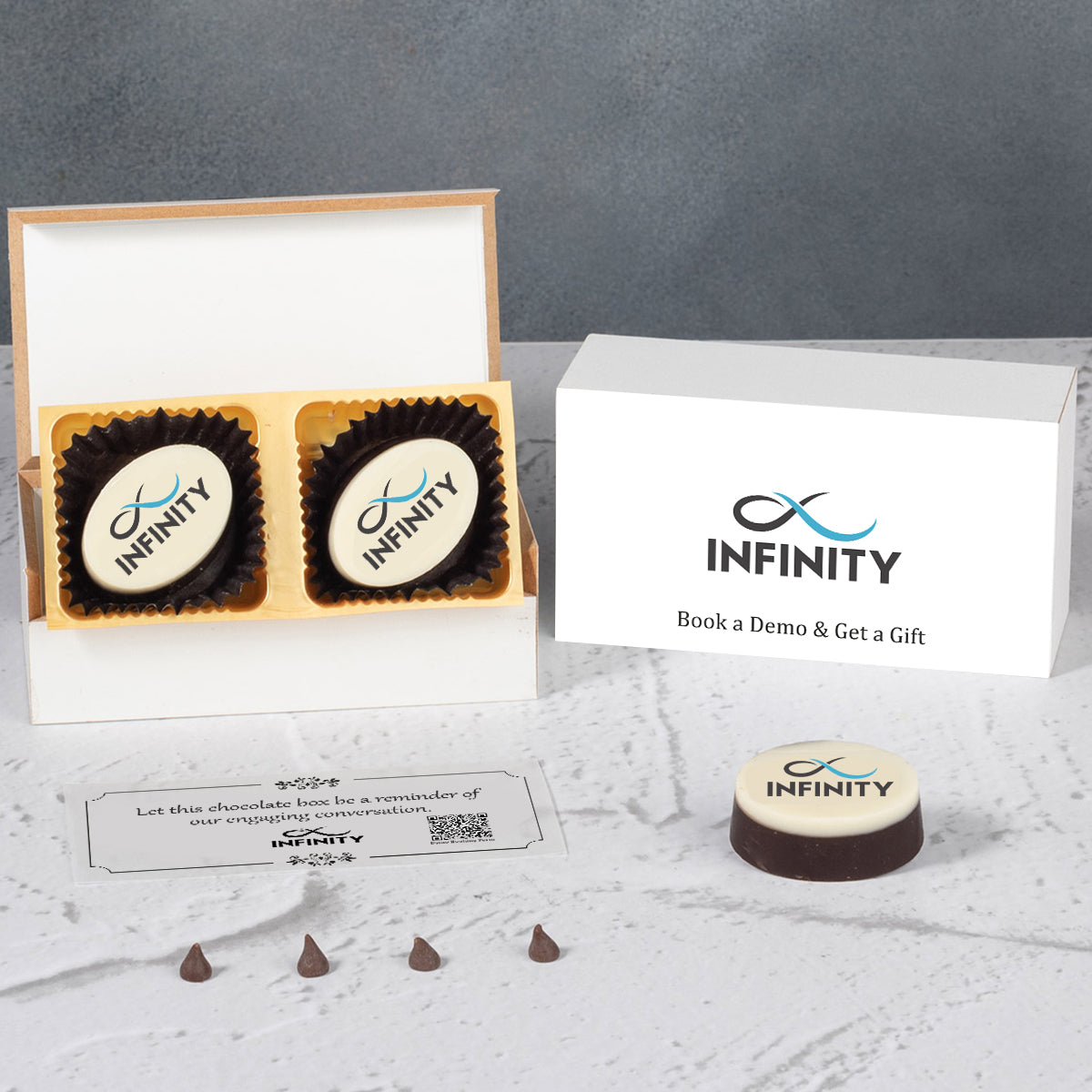
Book a Demo - Chocolate Box
📦 Box: Logo + “Book a Demo & Get a Gift”
📝 Message Inside: QR code linking to a demo booking form
🍫 Chocolates: One with “Demo” or calendar icon, one with logo
🎯 Purpose: Incentivizes visitors to book a demo, turning booth interest into qualified, scheduled leads.
Make it for your Brand
A Smarter Framework for Trade Show Lead Conversion
High-performing event teams don’t rely on luck. They rely on structure.
Conversion-focused brands start before the event even begins by using pre-event outreach strategies to attract the right audience to their booth. This ensures that conversations are intentional rather than accidental.
During the event, they apply a clear trade show lead qualification framework that helps staff quickly identify who is worth deeper engagement and follow-up.
They also equip booth staff with conversation tools that encourage discovery over pitching. Asking the right questions matters more than delivering the perfect script.
Finally, they design follow-up systems in advance. Instead of scrambling after the show, they rely on proven trade show lead nurturing email templates that reference real conversations and specific pain points.
When these elements work together—qualification, memory reinforcement, and contextual follow-up—conversion stops being a mystery and starts becoming predictable.
In Part 2, we’ll explore the data behind these patterns, examine real-world examples, and outline step-by-step actions you can take to turn trade show leads into revenue.
Custom-branded giveaway gifts improve recall—your logo should feel integrated, not forced, into the product design. Read more →
Data, Research, and Real-World Patterns Behind Poor Event Lead Quality
If trade show leads not converting feels like a recurring problem, it’s because the underlying causes repeat across industries. Research, field data, and post-event sales analysis consistently point to the same breakdowns in how companies approach exhibitions and expos.
According to Forbes , most trade show sales failures stem from confusing activity with intent. Booth conversations are logged as leads even when no buying signal exists. This inflates lead counts while quietly damaging conversion rates later.
Another consistent pattern appears in follow-up behavior. Insights from Harvard Business Review show that leads decay rapidly when follow-up is delayed or generic. After a busy trade show, inboxes fill quickly. When outreach lacks relevance, prospects mentally move on.
Sales and marketing alignment also plays a decisive role. Research from Gartner highlights that misalignment lowers conversion efficiency and increases friction around event-generated leads. When sales teams don’t trust the quality of trade show leads, they deprioritize them—often unconsciously.
There is also a cognitive factor. Trade shows overwhelm attendees with information, visuals, and conversations. According to MIT Sloan Management Review , experiences that lack reinforcement fade quickly from memory. Without a strong recall trigger, even promising booth conversations are forgotten within days.
Taken together, these patterns explain why poor event lead quality persists even at well-attended trade shows. The problem isn’t attendance—it’s how leads are captured, contextualized, and reactivated.
Practical How-To: Fixing Trade Show Lead Conversion Step by Step
Fixing trade show lead conversion doesn’t require radical changes. It requires discipline, structure, and intentional design before, during, and after the event.
The first step is redefining what a qualified lead actually means. Many teams rely on vague definitions like “good conversation” or “interested.” Instead, qualification should include specific indicators such as role, buying authority, problem awareness, and timing.
During the event, the right tools matter. Not all lead capture systems are designed for conversion. Reviewing trade show lead capture tools helps teams choose platforms that allow note-taking, tagging, and prioritization instead of simple badge scans.
Equally important is how booth staff engage attendees. Many trade show sales mistakes occur because staff default to pitching rather than listening. Using structured scripts and icebreakers for trade show booth staff helps uncover intent without feeling intrusive.
After the event, conversion depends on follow-up quality. Companies that rely on a single “great meeting you” email rarely see results. A proven post-event follow-up strategy uses multiple touchpoints, tailored messaging, and clear next steps.
Another overlooked fix is reinforcing memory. Thoughtful physical touchpoints—such as premium, customized items—act as reminders when prospects return to their desks. A well-designed giveaway can quietly reactivate the booth conversation days later.
This approach isn’t about gifting for attention. It’s about creating continuity between the in-person interaction and the digital follow-up.

Product Highlight Chocolate Box
📦 Box: Logo with 2–3 key product images or category icons
📝 Message Paper: “Discover our full range at [website] | Visit us at Booth #42”
🍫 Chocolates: Product icons or category names (e.g., AI Tool, CRM)
🎯 Purpose: Showcases core offerings at a glance—turning a simple giveaway into a mini product sampler that drives deeper interest.
Make it for your Brand
How Strategic Giveaways Support Lead Conversion
Giveaways are often misunderstood. Many companies treat them as traffic drivers rather than conversion tools. As a result, generic items attract people with no buying intent.
High-performing brands take a different approach. They use giveaways selectively, tying them to meaningful conversations and qualification milestones. When a prospect receives something thoughtful after a real discussion, the gesture feels personal rather than promotional.
Premium, consumable items are particularly effective because they create a moment of engagement. When a prospect opens a customized chocolate gift at their desk, the brand interaction continues outside the trade show floor.
This reinforces memory, improves response rates, and supports warmer follow-up conversations. The giveaway becomes a bridge between offline experience and online sales engagement.
When used strategically, giveaways don’t dilute lead quality—they strengthen it.
Aligning Sales and Marketing for Better Event ROI
One of the most reliable lead conversion fixes is improving sales and marketing alignment. Trade shows fail when marketing focuses on lead volume while sales focuses on immediate deals.
Alignment starts before the event. Teams should agree on audience targeting, qualification criteria, and success metrics. This ensures that everyone evaluates trade show performance through the same lens.
After the event, sharing context is critical. Sales teams need access to conversation notes, qualification tags, and intent indicators. Without this information, follow-up becomes generic and ineffective.
Companies that implement structured trade show lead nurturing email templates give sales a head start while maintaining consistency in messaging.
When sales trusts the quality of trade show leads, effort increases. When effort increases, conversion follows.
Trends and Expert Insight: The Future of Trade Show Lead Conversion
Trade shows are not disappearing—but expectations are changing. Buyers today are more selective, more informed, and less tolerant of generic outreach.
Insights from McKinsey show that personalization significantly improves engagement and trust. Applied to events, this means tailoring conversations, follow-ups, and experiences based on real buyer context.
Another emerging trend is the shift from volume-based metrics to outcome-based measurement. Companies are increasingly evaluating trade shows based on pipeline contribution, deal velocity, and customer lifetime value—not just lead counts.
Brands that adapt to these shifts will see stronger ROI from exhibitions and expos, even as competition for attention increases.
For B2B audiences, premium giveaway gifts signal credibility and help position your brand as high-value and trustworthy. Read more →
Conclusion: Turning Trade Show Leads Into Revenue
Trade show leads don’t fail because the channel is broken. They fail because systems break down.
When companies capture intent instead of contacts, create memorable experiences, and follow up with relevance, trade show leads convert at significantly higher rates.
Exhibitions remain one of the few environments where trust can be built face to face. With the right structure, that trust can be extended into long-term business relationships.
To support recall and engagement beyond the booth, explore premium corporate gifting options at ChocoCraft corporate gifts .
Key Information
| Key Area | What Goes Wrong | How to Fix It |
|---|---|---|
| Lead Capture | Badge scans collect unqualified contacts | Use intent-based questions and lead scoring |
| Booth Experience | Generic booths and giveaways are forgettable | Create memorable interactions and physical recall triggers |
| Lead Quality | High volume but low relevance | Focus on fewer, better-qualified prospects |
| Follow-Up | Generic, delayed emails | Personalize follow-ups within 24–48 hours |
| Sales Alignment | Sales distrusts event leads | Share context, notes, and qualification data |
| ROI Measurement | Measuring leads instead of outcomes | Track conversion rate and pipeline impact |
FAQs
1. Why do trade show leads not convert even after good booth conversations?
Many trade show leads don’t convert because conversations feel positive but lack real buying intent. Without qualification, teams follow up with people who were curious, not ready to buy. Strong conversations must uncover timelines, authority, and problems to improve conversion rates.
2. Are trade show leads worth it for B2B companies in the USA?
Yes, trade show leads can be worth it if quality is prioritized over quantity. Poor event lead quality comes from weak targeting and follow-up, not the channel itself. Companies that qualify leads and personalize follow-ups consistently see strong ROI from trade shows.
3. What is the biggest trade show sales mistake companies make?
The biggest trade show sales mistake is treating every lead the same. Decision-makers, researchers, and casual visitors require different follow-up strategies. When all leads receive identical emails, relevance drops and conversion suffers significantly.
4. How quickly should you follow up with trade show leads?
Trade show leads should ideally be followed up within 24–48 hours. Delayed follow-up reduces recall and interest, especially after large expos. Fast, contextual outreach dramatically improves response rates and helps prevent leads from going cold.
5. How can I improve poor event lead quality at trade shows?
Improving poor event lead quality starts with better booth conversations. Ask qualifying questions, train staff to listen, and capture intent signals. Pre-event outreach and clear audience targeting also reduce low-value booth traffic.
6. Do giveaways really help with trade show lead conversion?
Yes, when used strategically. Premium, thoughtful giveaways improve memory and brand recall, which directly supports conversion. Generic swag is often forgotten, but meaningful physical touchpoints help prospects remember your brand during follow-up.
7. Why do sales teams complain about trade show leads?
Sales teams often complain because leads lack context or intent. When marketing passes contacts without notes or qualification, sales struggles to prioritize. Aligning on what defines a “qualified lead” fixes this friction and improves trust.
8. What percentage of trade show leads typically convert?
Conversion rates vary widely, but unqualified trade show leads often convert poorly. Companies that implement lead qualification, fast follow-up, and personalization consistently outperform those chasing raw lead volume.
9. How do you turn trade show conversations into sales opportunities?
Turning conversations into sales requires capturing context, not just contact details. Notes about pain points, timelines, and roles allow follow-ups to feel relevant. Structured lead nurturing bridges the gap between conversation and conversion.
10. What should be included in a post-event follow-up strategy?
A strong post-event follow-up strategy includes quick outreach, personalized messaging, and multiple touchpoints. Referencing the booth conversation, offering relevant value, and spacing communication over time increases trade show lead conversion.
