

The Post-Event Follow-Up Strategy That Turns Trade Show Leads into Revenue

The Post-Event Follow-Up Strategy That Turns Trade Show Leads into Revenue
Explore Giveaway GiftsKey Takeaways
-
Trade show ROI is decided after the event, not during it. Fast, relevant, and structured follow-up matters more than booth traffic or swag volume.
-
Contextual, multi-touch follow-up converts better than one-off emails. Buyers expect continuity, not cold outreach.
-
Lead segmentation is critical for post-event conversion. Treating all leads equally reduces sales efficiency and deal velocity.
-
Physical brand recall enhances digital follow-up. Strategic gifting improves memory and response when used selectively.
-
Sales and marketing alignment directly impacts event ROI. Clear ownership and shared context drive better pipeline outcomes.
Trade shows don’t fail at lead generation—they fail at follow-up.
Every year, B2B brands across the United States invest heavily in exhibition booths, sponsorships, demos, travel, sales training, and giveaway gifts at expos and exhibitions. The intent is clear: meet decision-makers, spark conversations, and generate qualified leads.
Yet when the event ends, many teams walk away with the same frustration. Hundreds of leads collected. Dozens of conversations had. Very little revenue to show for it.
The reason is simple and uncomfortable: post-event lead conversion is broken.
Business cards are scanned and forgotten. Badge data is uploaded into CRMs without context. One generic “Great meeting you at the show” email is sent, and the opportunity quietly fades. Despite the fact that trade show attendees often have higher intent than inbound leads, most event-generated contacts are never meaningfully nurtured.
In a competitive B2B environment where buying cycles are long and decision-making involves multiple stakeholders, your trade show follow-up strategy in the USA matters more than your booth size, your swag budget, or even your foot traffic.
The brands that consistently win at events aren’t louder on the show floor. They’re more intentional after the event ends.
This guide breaks down a practical, proven post-event follow-up strategy designed specifically for sales nurturing events. It shows how to turn brief booth conversations into booked meetings, qualified opportunities, and long-term client relationships.
Stand out from competitors by choosing unique giveaway gifts that go beyond standard pens and notebooks. Read more →
Why Follow-Up Is the Real Event ROI
Trade shows and exhibitions occupy a unique space in B2B marketing. Unlike digital channels, events allow face-to-face conversations, real-time problem discovery, and emotional engagement.
That human connection is powerful—but fragile.
Once the event ends, your prospect returns to overflowing inboxes, internal priorities, and competing vendors. Without a structured follow-up system, the advantage you earned during the event disappears faster than most teams expect.
Research from Harvard Business Review on lead response time shows that both speed and relevance dramatically influence conversion outcomes. Yet most organizations treat post-event follow-up as an administrative task rather than a revenue-driving process.
Several common breakdowns happen immediately after events:
- Marketing teams celebrate lead volume without qualification
- Sales teams receive long lists with little context
- Follow-up emails are generic and poorly timed
- No clear ownership exists for post-event conversion
This disconnect explains why marketers frequently ask questions like “Why don’t trade show leads convert?” or “How long should you wait before following up after an event?”
The reality is this: events don’t create revenue—systems do.
A well-designed post-event follow-up strategy bridges the excitement of the booth conversation with the rational evaluation phase of the buyer and the trust required to enter a sales process.
Corporate Giveaway Gifts for Expo, Exhibition & Trade Shows
Attract attention and drive brand recall with premium corporate giveaway gifts featuring personalized chocolate branding for expos and trade shows.
Explore Giveaway Gifts NowThe Core Problem: Where Most Post-Event Strategies Fail
1. Generic Follow-Up Kills Momentum
Most B2B event email follow-ups sound identical. They thank the prospect for stopping by, suggest a call, and provide little reason to respond. For a buyer who spoke with ten similar vendors, this creates zero differentiation.
2. Timing Is Either Too Fast or Too Late
Some teams send automated emails the next morning without personalization. Others wait weeks, assuming interest will remain. Both approaches fail because they ignore buyer context.
According to insights shared by Harvard Business Review, speed alone does not convert leads. Relevance does.
3. No Lead Segmentation After the Event
High-intent buyers, casual visitors, and long-term prospects are treated the same. This wastes sales effort and frustrates both teams.
To fix this, teams need a clear qualification framework, such as the one outlined in the trade show lead qualification framework for sales teams.
4. Zero Sensory Recall
Once the event ends, your brand often disappears completely from the buyer’s physical environment. Digital follow-up alone competes in crowded inboxes and is easy to ignore.
Without a tangible reminder, even strong conversations fade quickly.
Key Pillars of a High-Converting Post-Event Follow-Up Strategy (Part 1)
High-performing B2B teams follow a repeatable framework. The first two pillars set the foundation for everything that follows.
Pillar 1: Immediate Contextualization, Not Just Speed
Fast follow-up matters, but contextual follow-up converts.
Effective post-event emails reference the exact problem discussed at the booth, the prospect’s role, and why they engaged in the first place. This signals that the follow-up is a continuation of a real conversation, not a mass email.
For example, referencing a challenge discussed during a demo immediately triggers recognition and relevance.
Teams looking to improve booth-to-follow-up transitions can benefit from structured approaches like the scripts and icebreakers for trade show booth staff, which make post-event personalization easier.
Pillar 2: Multi-Touch Sales Nurturing, Not One Email
One email does not equal a follow-up strategy.
Research from McKinsey and MIT Sloan consistently shows that B2B buying journeys are non-linear. Buyers need multiple touchpoints before engaging with sales.
High-converting follow-up includes a combination of personalized emails, sales outreach, value-driven content, and strategic reminders.
This approach answers the common question, “How do you nurture trade show leads into sales?” with a simple principle: consistency without pressure.
These two pillars form the foundation. The next phase involves data, tangible recall, and execution—which we’ll explore in Part 2.
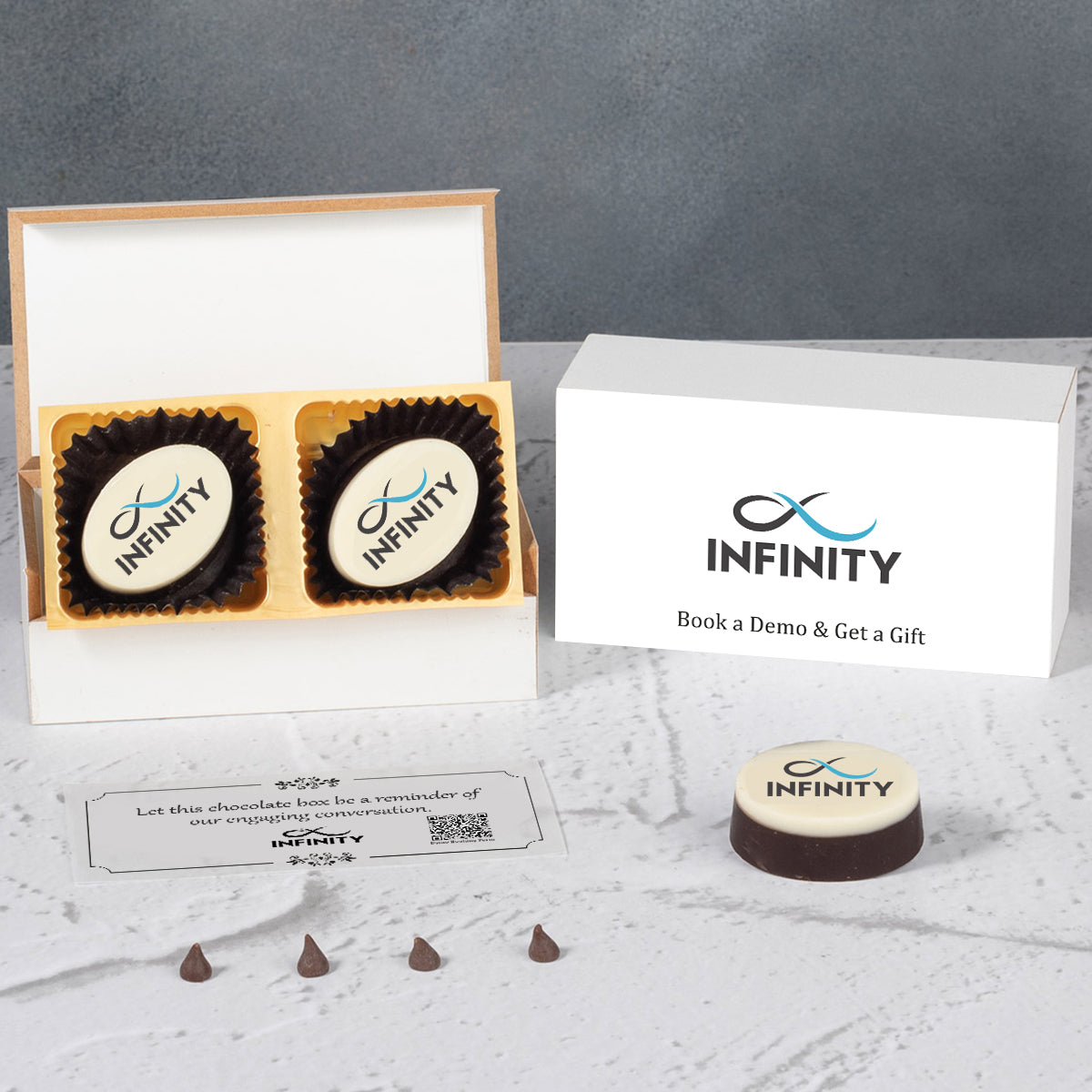
Book a Demo - Chocolate Box
📦 Box: Logo + “Book a Demo & Get a Gift”
📝 Message Inside: QR code linking to a demo booking form
🍫 Chocolates: One with “Demo” or calendar icon, one with logo
🎯 Purpose: Incentivizes visitors to book a demo, turning booth interest into qualified, scheduled leads.
Make it for your Brand
Data, Research, and Real-World Proof: What Actually Drives Conversion
Once an exhibition ends, most B2B buyers do not immediately enter a sales conversation. Instead, they evaluate options privately, compare vendors, and discuss internally.
Research from Harvard Business Review on lead follow-up speed highlights a critical reality: buyers who are contacted with relevant context convert at significantly higher rates than those who receive fast but generic outreach.
This insight challenges a common misconception in event marketing. Speed matters, but speed without relevance feels transactional and forgettable.
Gartner’s analysis of the modern buying journey reinforces this. According to Gartner’s B2B buying journey research, buyers spend most of their decision-making time independently before engaging sales. This means post-event follow-up must educate and reinforce value, not immediately sell.
Event effectiveness data from Statista’s trade show marketing insights shows that exhibitions remain one of the highest-intent lead sources available to B2B brands. However, ROI drops sharply when follow-up lacks structure or continuity.
In practical terms, this explains why teams often say, “We had great conversations, but nothing closed.” The issue is not lead quality alone. It is the absence of a conversion system after the event.
High-performing organizations treat post-event follow-up as a continuation of the buying journey rather than a closing tactic.
Custom-branded giveaway gifts improve recall—your logo should feel integrated, not forced, into the product design. Read more →
Key Pillars of a High-Converting Post-Event Follow-Up Strategy (Continued)
Pillar 3: Tangible Recall Through Strategic Gifting
Digital follow-up dominates most B2B strategies, but digital communication is also easy to ignore. After an event, inboxes fill quickly, and even well-written emails compete for attention.
Physical brand touchpoints work differently. They occupy space in the buyer’s real world and trigger memory without requiring immediate action.
When used intentionally, premium corporate gifting supports post-event lead conversion by reinforcing recall. A customized gift that references the event or conversation signals effort and relevance.
This is especially effective when gifting complements digital outreach. For example, a follow-up email that mentions a personalized gift arriving soon creates anticipation and improves open rates.
Solutions aligned with corporate gifts for B2B events work best when applied selectively to high-value prospects rather than mass distribution.
The goal is not to impress everyone. The goal is to stay present in the buyer’s decision window.
Pillar 4: Sales and Marketing Alignment After the Event
Many post-event strategies fail due to internal misalignment rather than external factors.
Marketing teams focus on lead volume. Sales teams focus on pipeline quality. Without alignment, follow-up becomes inconsistent and ineffective.
According to MIT Sloan Management Review on sales and marketing alignment, unclear ownership and inconsistent messaging are among the biggest barriers to conversion in B2B organizations.
High-performing teams address this by defining clear post-event workflows. Leads are categorized quickly, messaging is aligned across channels, and sales outreach builds directly on marketing context.
Instead of asking whether follow-up happened, these teams ask whether the conversation continued naturally from the event.
Practical How-To: A Step-by-Step Post-Event Follow-Up Playbook
Step 1: Segment Leads Within 48 Hours
Effective follow-up begins with segmentation. Leads should be grouped by intent, role, and timeline as soon as possible.
This prevents high-intent prospects from being lost in generic outreach and helps sales prioritize effort.
To set realistic benchmarks, review insights from how many leads you should expect from a trade show.
Step 2: Launch a Multi-Touch Follow-Up Sequence
Single emails rarely convert. A structured sequence creates familiarity and trust over time.
Effective sequences include personalized emails, value-driven content, and timely sales outreach. Guidance from trade show lead nurturing email templates can help teams maintain consistency without sounding automated.
Step 3: Reinforce Memory with a Physical Touchpoint
For high-value prospects, a premium gift reinforces brand recall during long decision cycles.
Curated options such as a 2 chocolate corporate gift box, a 4 chocolate corporate gift box, or a 6 chocolate corporate gift box allow brands to scale gifting without overextending budgets.
The effectiveness comes from timing and relevance, not extravagance.
Step 4: Convert Engagement into Sales Progression
Replies alone do not indicate success. The goal is movement through the pipeline.
To bridge this gap, teams can follow frameworks outlined in how to turn trade show conversations into sales, which focuses on transitioning interest into outcomes.
Trends and Expert Insight: The Future of Post-Event Follow-Up
Post-event follow-up is evolving. Buyers now expect consistent experiences across physical and digital touchpoints.
According to McKinsey’s sales research, successful B2B organizations are integrating data, personalization, and human touch into unified follow-up systems.
Emerging trends include CRM-triggered workflows, smaller but higher-quality lead targets, and increased emphasis on post-event education rather than immediate selling.
As buyers become more selective, relevance and timing will matter more than volume.

Product Highlight Chocolate Box
📦 Box: Logo with 2–3 key product images or category icons
📝 Message Paper: “Discover our full range at [website] | Visit us at Booth #42”
🍫 Chocolates: Product icons or category names (e.g., AI Tool, CRM)
🎯 Purpose: Showcases core offerings at a glance—turning a simple giveaway into a mini product sampler that drives deeper interest.
Make it for your Brand
Conclusion
Trade shows do not fail because of poor leads. They fail because follow-up lacks structure, intention, and continuity.
A high-converting post-event follow-up strategy combines relevance with consistency, digital engagement with physical recall, and marketing execution with sales ownership.
For B2B brands investing in exhibitions, expos, and events, the real opportunity begins after the booth closes.
When follow-up is treated as a system rather than a task, trade show leads stop fading—and start converting.
For B2B audiences, premium giveaway gifts signal credibility and help position your brand as high-value and trustworthy. Read more →
Key Information
| Focus Area | Key Insight | Why It Matters |
|---|---|---|
| Post-Event Timing | Follow-up must be fast and relevant | Speed without context lowers response rates |
| Lead Segmentation | Group leads by intent and role | Prevents high-value prospects from getting lost |
| Follow-Up Format | Multi-touch beats single emails | B2B buyers need repeated value-driven engagement |
| Physical Recall | Tangible touchpoints improve memory | Helps brands stand out post-event |
| Sales Alignment | Clear handoff boosts conversions | Reduces friction between marketing and sales |
| Buyer Behavior | Buyers research independently | Follow-up must educate, not push |
| Event ROI | Conversion happens after the booth | Systems outperform one-time effort |
Frequently Asked Questions
1. How do you follow up after a trade show to actually convert leads?
The best trade show follow-up strategy focuses on relevance, not just speed. Reference the booth conversation, segment leads by intent, and use a multi-touch approach with emails, sales outreach, and value-driven content. This builds continuity and improves post-event lead conversion.
2. Why don’t most trade show leads convert into sales?
Most trade show leads don’t convert because follow-up is generic, delayed, or inconsistent. Leads are often dumped into CRMs without context, and buyers receive one-size-fits-all emails. Without structured sales nurturing after events, even high-intent prospects disengage.
3. How soon should you follow up after a B2B event or exhibition?
Ideally, initial follow-up should happen within 24–48 hours. However, timing alone isn’t enough. The message must reference the specific discussion or problem shared at the booth. Relevant post-event follow-up converts better than fast but generic outreach.
4. What is the best post-event email follow-up strategy for B2B events?
The most effective B2B event email follow-up uses a short sequence instead of one email. Start with a contextual message, follow with value-driven content, and align sales outreach. This approach supports longer buying cycles common in trade show sales.
5. How many follow-up touches are needed after a trade show?
Most B2B buyers require five to seven meaningful touchpoints after an event. This can include emails, calls, content sharing, and reminders. Multi-touch sales nurturing events outperform single-touch strategies because buyers evaluate options over time.
6. Should you send corporate gifts as part of post-event follow-up?
Yes, when used strategically. Premium, personalized gifts improve brand recall and support digital follow-up. The key is selective use for high-value prospects, ensuring gifting complements the sales process rather than replacing meaningful engagement.
7. How do you segment trade show leads for better conversion?
Segment leads based on buying intent, role, timeline, and conversation quality. High-intent decision-makers should receive personalized sales follow-up, while early-stage prospects benefit from educational nurturing. Segmentation improves sales efficiency and post-event lead conversion.
8. What role does sales and marketing alignment play after events?
Sales and marketing alignment ensures consistent messaging, clear ownership, and timely follow-up. When both teams share context from the event, prospects experience continuity instead of repetition, which increases trust and improves trade show pipeline building.
9. Are trade show leads better than digital leads?
Trade show leads often carry higher intent because of face-to-face interaction. However, without a strong post-event follow-up strategy, their advantage disappears. Events create opportunity, but structured follow-up determines whether that opportunity converts.
10. How do you measure success of a post-event follow-up strategy?
Success should be measured through meeting bookings, pipeline progression, response rates, and deal velocity—not just email opens. Effective post-event lead conversion focuses on movement through the sales funnel, not vanity metrics.
