

How to Choose the Right Trade Show for Your Industry: A Smart Exhibition Strategy That Actually Delivers ROI

How to Choose the Right Trade Show for Your Industry: A Smart Exhibition Strategy That Actually Delivers ROI
Explore Giveaway GiftsKey Takeaways
-
Trade show success starts with selection, not execution. Choosing events that align with your industry, audience, and funnel stage delivers stronger ROI than attending the largest expos.
-
Audience relevance matters more than footfall. Smaller, industry-specific trade shows often outperform large expos by delivering higher-intent conversations and better-quality leads.
-
Clear goals drive better decisions. Defining whether your objective is brand awareness, lead generation, or partnerships helps filter out trade shows that don’t support your exhibition strategy.
-
Experience differentiation increases recall. Thoughtful booth experiences and premium, personalized giveaways significantly improve post-event engagement and follow-up response rates.
-
Measurement should be planned before the event. Tracking KPIs like cost per lead, meeting conversion, and follow-up quality ensures trade shows are evaluated as strategic investments—not expenses.
Choosing a trade show is no longer a routine marketing task or a checkbox on an annual calendar. It is a strategic decision that directly affects brand perception, lead quality, sales pipeline velocity, and long-term return on investment. In the USA, companies can choose from hundreds of exhibitions across nearly every industry imaginable, each promising visibility, networking opportunities, and growth. Yet despite this abundance, many exhibitors walk away frustrated.
The reason trade shows fail for many companies is not poor booth design or weak follow-up. It is poor selection. When the event itself is misaligned with your industry, audience, or business goals, even the best execution struggles to compensate.
The most successful brands treat industry trade show selection as a core part of their exhibition strategy rather than a standalone marketing expense. The right trade show puts your team in front of decision-makers who already have context, intent, and budget. The wrong trade show drains resources, exhausts teams, and delivers little beyond superficial exposure.
For companies investing in corporate giveaway gifts for exhibitions and trade shows, this decision becomes even more critical. Premium giveaways only work when they are placed in the hands of the right audience. Alignment between event, attendee, and engagement experience is what transforms a giveaway into a relationship starter.
This guide explains how to choose trade shows in the USA that align with your industry, business objectives, and growth stage, helping you avoid costly mistakes and build a sustainable exhibition strategy.
High-ROI giveaway gifts balance cost with long-term usage, ensuring your brand stays visible after the event ends. Read more →
Understanding the US Trade Show Landscape
The United States hosts one of the largest and most mature trade show ecosystems in the world. From large-scale, multi-industry expos held in major convention centers to tightly focused niche events run by industry associations, the range of options can be overwhelming.
Many organizations default to attending the biggest trade shows by industry, assuming size equals success. In practice, large expos often bring broad audiences, higher costs, and intense competition for attention. Smaller, industry-specific trade shows, on the other hand, tend to attract attendees with clearer intent and more defined purchasing authority.
Research published by Statista on trade fairs and ongoing exhibitor insights from Exhibitor Online consistently show that exhibitors see better ROI when audience relevance is prioritized over sheer volume.
This shift is changing how smart companies approach exhibition strategy. Instead of asking how many people will attend, they ask who will attend, why they are there, and whether those attendees match their ideal customer profile.
Trade show selection also determines how smoothly everything else unfolds. Booth layout, messaging, staffing, and engagement tactics are all influenced by the nature of the event. A detailed overview of booth planning fundamentals is covered in how to plan a successful trade show booth in the USA.
Corporate Giveaway Gifts for Expo, Exhibition & Trade Shows
Attract attention and drive brand recall with premium corporate giveaway gifts featuring personalized chocolate branding for expos and trade shows.
Explore Giveaway Gifts NowThe Core Problem: Why Companies Consistently Choose the Wrong Trade Shows
The most common trade show mistake is not poor execution but poor decision-making at the selection stage.
Many companies fall into predictable traps:
- They attend events simply because competitors are present.
- They equate high foot traffic with high-quality opportunities.
- They ignore where the event fits within the buyer’s journey.
- They fail to define measurable success criteria.
Without a clear objective, evaluating whether a trade show fits your exhibition strategy becomes impossible. A company seeking brand awareness will measure success differently from one focused on lead generation or partnerships.
This distinction is explored further in trade show goals: brand awareness vs lead generation, which explains why mismatched objectives often lead to disappointment.
The financial consequences of poor trade show selection are significant. Booth space, logistics, shipping, staffing, travel, accommodation, and engagement materials all contribute to total cost. Many of these expenses are overlooked during planning. A transparent breakdown of real-world spending is detailed in trade show budget breakdown: where companies actually spend.
Strategic Framework: How to Evaluate Trade Shows by Industry
Pillar 1: Audience and Industry Alignment
The first and most important filter is relevance. Ask whether the trade show is designed specifically for your industry or whether your industry is only one of many represented. Industry-focused events typically deliver fewer conversations, but those conversations are more meaningful and conversion-ready.
Pillar 2: Buyer Intent and Event Purpose
Every trade show serves a primary purpose. Some are discovery-oriented, attracting early-stage researchers, while others attract buyers actively comparing vendors. Matching event intent with your sales cycle improves both lead quality and team morale.
Pillar 3: Cost Versus Strategic Value
Evaluating cost requires looking beyond booth fees. Consider logistics complexity, travel requirements, staffing needs, and engagement investments. A higher-cost event may deliver stronger ROI if the audience fit is right.
Pillar 4: Ability to Differentiate and Be Remembered
The right trade show gives you space to stand out. Premium, thoughtful engagement—such as personalized chocolate gift boxes used strategically—helps brands create memorability without aggressive selling. This is especially effective in high-intent, B2B environments where attention is limited.
When these four pillars align, trade show participation shifts from a gamble to a calculated investment.
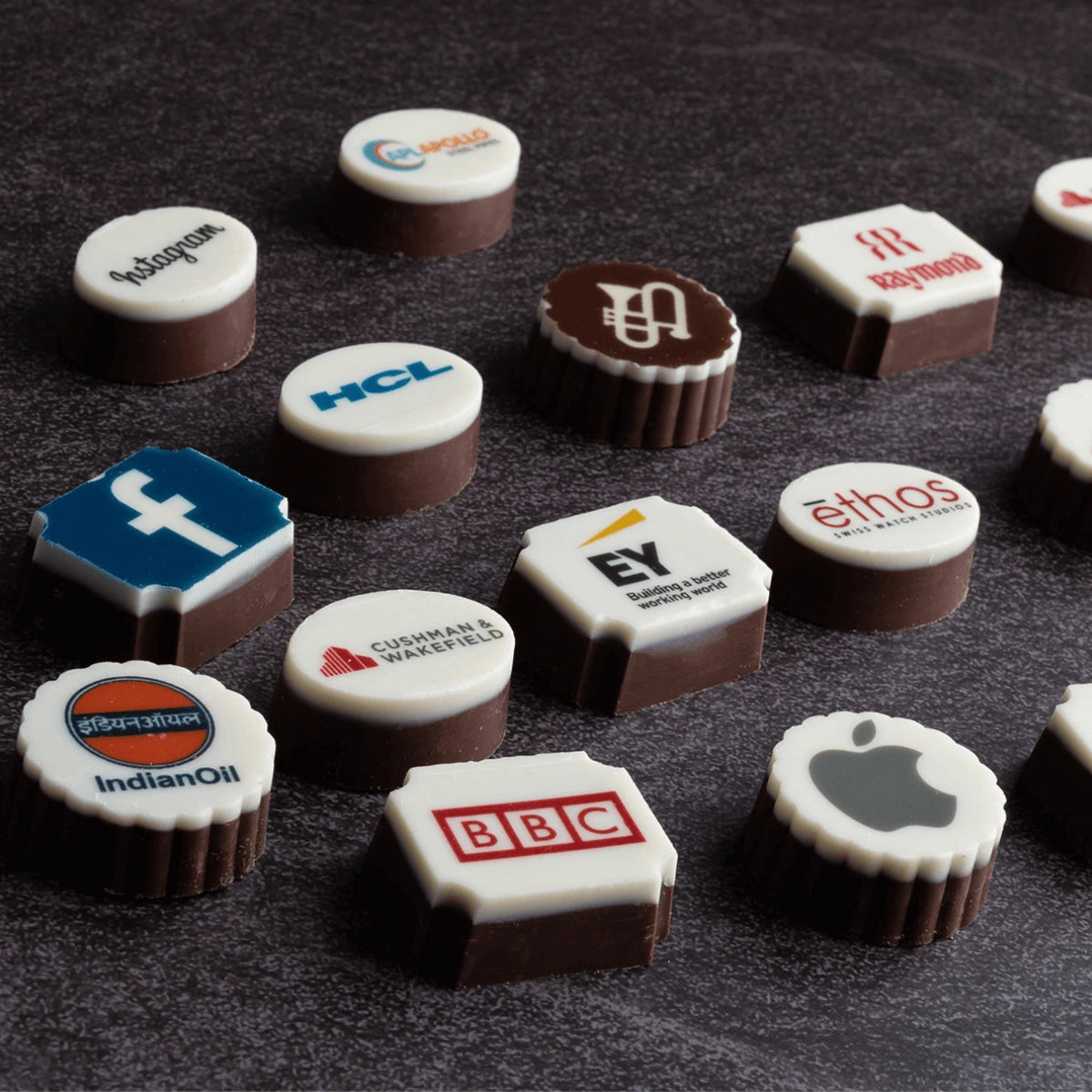
Personalized Corporate Giveaway Chocolates
Custom-branded chocolate giveaway gifts designed to boost visibility at exhibitions and corporate events.
Customize for Your BrandData, Research, and Real-World Insights: What Actually Drives Trade Show ROI
One of the most persistent myths in exhibition strategy is that larger trade shows automatically deliver better results. In reality, data and exhibitor experience consistently show that relevance, intent, and alignment matter far more than scale.
Industry insights shared by Exhibitor Media Group highlight that exhibitors participating in smaller, industry-focused trade shows often report higher lead-to-conversion ratios compared to those attending large, general expos. These events attract attendees who arrive with specific problems, budgets, and decision-making authority.
Behavioral research discussed in Harvard Business Review reinforces this insight by explaining how decision-makers remember experiences that feel relevant, emotionally engaging, and tangible. In crowded trade show environments, relevance cuts through noise more effectively than spectacle.
This explains why exhibitors that create meaningful, tactile booth experiences tend to outperform those relying only on digital brochures or generic pitches. When attendees engage physically—through conversation, demonstration, or a thoughtful takeaway—the interaction is more likely to be remembered after the event.
Real-world examples from B2B exhibitors show that when the right trade show is chosen, even modest booth setups can outperform larger, more expensive activations at poorly aligned events.
Stand out from competitors by choosing unique giveaway gifts that go beyond standard pens and notebooks. Read more →
How to Choose the Right Trade Show: A Practical, Repeatable Process
Once you understand that alignment matters more than size, the next step is applying a structured process to industry trade show selection.
Step 1: Define One Primary Objective Per Event
Every trade show should serve one dominant purpose. Common objectives include brand awareness, qualified lead generation, partner discovery, or customer relationship strengthening. Trying to accomplish everything at a single event usually leads to diluted messaging and unclear outcomes.
Step 2: Shortlist Events Based on Industry Relevance
Rather than spreading budgets across many events, focus on two or three trade shows that directly serve your industry. Industry-specific expos often deliver better conversations, even if attendance numbers are lower.
Step 3: Analyze Attendee Quality Before Committing
Request detailed attendee data from event organizers, including job titles, seniority levels, and company types. This information reveals whether the event attracts decision-makers or primarily students, consultants, and vendors.
Step 4: Align Engagement Tactics With Audience Expectations
Corporate buyers value experiences that respect their time and professionalism. This is where premium, subtle engagement performs better than aggressive promotion. Thoughtful booth interactions paired with high-quality takeaways help extend conversations beyond the show floor.
For exhibitors using customized chocolates as part of their engagement strategy, these products work best when positioned as a refined gesture rather than a mass giveaway. Explore structured options through corporate gifting solutions.
Step 5: Decide Measurement Criteria Before the Event Begins
Measuring success after the event only works when metrics are defined beforehand. Common KPIs include cost per qualified lead, number of post-event meetings booked, follow-up response rates, and pipeline contribution.
A detailed KPI framework can be found in trade show KPIs every exhibitor should track.

Call to Action - Chocolate Box
📦 Box: Logo + bold CTA — “Become Our Distributor” / “Partner With Us”
📝 Message Inside: Contact details + QR code to sales deck or lead form
🍫 Chocolates: One with “Let’s Partner”, one with logo
🎯 Purpose: Turns a premium gift into a partnership trigger—driving real business inquiries, not just brand recall.
Make it for your BrandConnecting Trade Show Choice With Your Overall Exhibition Strategy
Trade show selection does not exist in isolation. It sets the foundation for every other decision related to exhibiting.
Once the right trade show is chosen, booth planning becomes more focused, messaging becomes clearer, and team preparation becomes more effective. This alignment reduces last-minute changes and improves on-floor confidence.
Following a structured planning timeline ensures that each phase—from logistics to engagement materials—is handled systematically. A detailed planning reference is available in trade show planning timeline: 90 days before to event day.
Team readiness is another critical factor. Staff who understand why they are attending a specific trade show perform better in conversations and qualification. Practical preparation guidance is outlined in how to prepare your team for a trade show.
When trade show selection, planning, and team preparation align, exhibitions become predictable, repeatable growth channels rather than high-risk experiments.
Trends and Expert Insights Shaping Modern Trade Show Selection
Trade show strategy continues to evolve as buyer behavior changes. Leading business publications increasingly emphasize quality over quantity in event participation.
Insights shared by Forbes Communications Council highlight a growing preference among B2B brands for fewer, more targeted events that allow for deeper engagement.
Another key trend is the rising importance of experience-driven differentiation. Attendees expect exhibitors to offer something meaningful—whether that is insight, connection, or a thoughtfully designed physical interaction.
This shift favors brands that plan exhibitions holistically, considering event selection, booth narrative, team behavior, and engagement tools as parts of a single strategy rather than isolated tactics.
Custom-branded giveaway gifts improve recall—your logo should feel integrated, not forced, into the product design. Read more →
Conclusion
Choosing the right trade show is not about being everywhere. It is about being present where your audience, objectives, and capabilities intersect.
- Audience relevance consistently outperforms event size
- Clear objectives improve trade show selection accuracy
- Aligned engagement strategies increase memorability
- Pre-defined metrics turn exhibitions into measurable investments
If you are refining your exhibition strategy and looking to support high-intent conversations with premium engagement tools, consider curated options such as customized chocolate gift boxes for corporate gifting that align with professional trade show environments.
When trade show selection is intentional, exhibitions stop being expenses and start becoming growth assets.

Mini Coupon Box as Giveaway
📦 Box: Logo + “Here’s a Deal”
📝 Message Inside: Coupon code — “Use this for 20% off today only”
🍫 Chocolates: One with “20% OFF”, one with “Special Offer” or logo
🎯 Purpose: Converts booth visitors into instant buyers by creating urgency and measurable online sales.
Make it for your BrandKey Information
| Selection Factor | What to Evaluate | Why It Matters |
|---|---|---|
| Industry Alignment | Is the event specific to your niche or broadly categorized? | Improves lead quality and relevance |
| Audience Profile | Job titles, decision-making authority, attendee intent | Ensures conversations convert into opportunities |
| Event Objective | Awareness, lead generation, partnerships, retention | Aligns expectations and success metrics |
| Cost vs Value | Total spend including booth, logistics, staffing, giveaways | Prevents budget overruns and low ROI |
| Competitive Density | Number of similar exhibitors | Determines ability to stand out |
| Engagement Potential | Booth experience, giveaways, interaction formats | Drives memorability and follow-up success |
| Measurement Plan | KPIs defined before the event | Enables data-backed exhibition decisions |
FAQs
1. How do I choose the right trade show for my industry in the USA?
Choosing the right trade show in the USA starts with aligning the event to your industry niche, target audience, and business goals. Instead of focusing on size, evaluate attendee profiles, buyer intent, and relevance. The right industry trade show delivers higher-quality conversations and better ROI.
2. Are large trade shows better than niche trade shows for B2B companies?
Not always. Large trade shows offer visibility, but niche trade shows often deliver higher-intent leads. Industry-specific events attract decision-makers who are actively evaluating solutions, making them more effective for B2B companies focused on lead generation, partnerships, or conversions rather than broad awareness.
3. What factors should I consider when selecting trade shows by industry?
Key factors include industry alignment, attendee job roles, buyer intent, total cost, and competitive density. A strong exhibition strategy prioritizes relevance over footfall. Evaluating these factors helps ensure the trade show supports your sales funnel and delivers measurable business outcomes.
4. How many trade shows should a company participate in each year?
Most companies perform better by attending fewer, high-relevance trade shows rather than many average ones. Participating in two to four well-aligned industry trade shows allows teams to focus budgets, improve execution, and build stronger post-event follow-ups without spreading resources too thin.
5. Is exhibiting at trade shows still worth the investment?
Yes, when trade shows are chosen strategically. Exhibiting is worth the investment if the event aligns with your industry, audience, and goals. When paired with clear KPIs, trained teams, and meaningful engagement, trade shows remain one of the strongest channels for B2B relationship building.
6. How do I know if a trade show will generate quality leads?
Review past attendee data such as job titles, company size, and industry mix. Trade shows that attract decision-makers and budget holders are more likely to generate quality leads. Asking organizers for attendee demographics is a critical step in industry trade show selection.
7. What role do corporate giveaways play in trade show success?
Corporate giveaways support engagement and recall when used thoughtfully. Premium, relevant giveaways—especially personalized ones—help extend conversations beyond the booth. In the right trade show environment, giveaways act as relationship starters rather than promotional clutter, improving follow-up response rates.
8. Should trade show goals be brand awareness or lead generation?
It depends on the event and your business stage. Some trade shows are ideal for brand awareness, while others are better for lead generation. Defining one primary goal per event ensures your exhibition strategy, booth messaging, and success metrics remain focused and effective.
9. How can I measure ROI from the trade shows I choose?
Trade show ROI should be measured using predefined KPIs such as cost per lead, number of qualified meetings, follow-up response rates, and pipeline contribution. Planning measurement before the event ensures trade shows are evaluated as strategic investments, not just marketing expenses.
10. What is the biggest mistake companies make when choosing trade shows?
The biggest mistake is selecting trade shows based on popularity rather than relevance. Following competitors or choosing the largest event often leads to poor ROI. Successful exhibitors choose trade shows that align with their industry, audience intent, and exhibition strategy from the start.
