

Finding the Right Gift Value for High‑End Property Clients: A Smart Luxury Gifting Strategy for Realtors

Finding the Right Gift Value for High‑End Property Clients: A Smart Luxury Gifting Strategy for Realtors
Shop Corporate GiftsKey Takeaways
-
-
Gift value should align with deal size and relationship depth, not a flat budget or habit.
-
Personalization consistently outperforms price in luxury real estate gifting.
-
Consumable, well-presented gifts feel premium without creating taste or clutter risks.
-
Timing matters—housewarming and post-closing moments often create stronger recall.
-
Strategic gifting drives referrals and long-term loyalty, not just post-deal gratitude.
-
In luxury real estate, every interaction leaves a signal. From the way listings are presented to how negotiations are handled, clients continuously assess professionalism, intent, and attention to detail. The closing gift, often treated as a formality, is actually one of the most emotionally charged touchpoints in the entire transaction.
For high-end property clients, a gift is never just about courtesy. It becomes a quiet reflection of how much the relationship mattered, how well the realtor understood the client’s expectations, and whether the experience felt bespoke or transactional. In a market where trust and reputation drive repeat business, gifting plays a far more strategic role than many professionals realize.
For realtors exploring thoughtful corporate gifts for customers, the challenge is not whether to give a gift, but how to choose the right value. Spend too little and the gesture feels dismissive. Spend too much and it risks feeling excessive or uncomfortable. The right gift value sits at the intersection of deal size, personalization, and long-term relationship intent.
Why Gift Value Matters More in Luxury Real Estate
Luxury real estate operates in a different emotional economy than mass-market transactions. High-net-worth clients are not only buying property; they are investing in lifestyle, privacy, and peace of mind. Every service interaction is filtered through expectations of discretion and refinement.
Research published by Harvard Business Review consistently shows that personalization increases perceived value far more effectively than higher spend alone. In luxury contexts, relevance and intent outweigh price. A thoughtfully curated gift often leaves a stronger impression than a costly but generic item.
This distinction explains why luxury realtor gifting differs sharply from traditional corporate giveaways. The goal is not visibility at scale, but emotional resonance with a single individual or family. The right gift value reinforces professionalism, creates lasting recall, and subtly positions the realtor as a trusted advisor rather than a transactional intermediary.
Premium Corporate Gifts
Impress clients, employees, and partners with personalized chocolate gift boxes designed to leave a lasting impact.
Explore NowThe Core Question: How Much Is Appropriate?
One of the most common and uncomfortable questions realtors ask is how much they should spend on a high-end closing gift. The reality is that there is no universal number. Flat budgets fail because they ignore context.
According to insights shared by Forbes, affluent clients evaluate value based on effort, relevance, and emotional intelligence rather than absolute cost. A five-hundred-dollar gift can feel extravagant in one scenario and surprisingly underwhelming in another.
Several factors influence whether a gift feels appropriate or misaligned. These include the overall deal size, the complexity of the transaction, the length of the client relationship, and the likelihood of future referrals or repeat business. Without considering these dimensions, gifting becomes guesswork.
Understanding the Deal Size Gift Strategy
Experienced luxury realtors often adopt what can be described as a deal size gift strategy. Instead of choosing gifts based on habit or convenience, they align gift value proportionally with transaction value and relationship importance.
This does not mean rigid formulas or visible percentage calculations. Rather, it provides a mental framework that ensures consistency and prevents emotional over- or under-spending. Gifting becomes intentional rather than reactive.
However, proportionality alone does not guarantee success. Research from MIT Sloan Management Review highlights that tangible, emotionally relevant gifts are remembered significantly longer than cash-equivalent rewards or experiences that fade quickly.
This insight explains why personalized consumables often outperform traditional luxury merchandise. A gift that can be shared, enjoyed, and remembered creates a positive association without introducing the risk of permanence or taste mismatch.
The Role of Personalization in Perceived Value
Personalization is the multiplier that transforms a reasonable gift into a memorable one. High-net-worth clients are accustomed to receiving gifts, but few of those gifts feel genuinely considered.
Effective personalization does not rely on overt branding. Subtle details such as a family name, a congratulatory message, or a move-in date elevate perceived value without appearing promotional. Over-branding, on the other hand, can dilute luxury perception.
This is where premium customized consumables find their strength. Brands like ChocoCraft specialize in personalized chocolate gifting that allows realtors to incorporate thoughtful details while maintaining elegance. Presented in refined keepsake boxes, these gifts feel indulgent yet restrained, making them suitable across a wide range of deal values.
For inspiration, explore examples of high-value real estate gifts that balance customization, presentation, and proportional spend.
Why Presentation Signals Professionalism
In luxury gifting, presentation is not secondary; it is foundational. Before the gift is touched or tasted, its packaging communicates quality, intention, and care.
A well-presented gift sets expectations and reinforces brand positioning. Elegant boxes, premium materials, and thoughtful unboxing experiences signal that the realtor values detail. This matters deeply to clients who have just completed a high-stakes transaction.
Poor presentation, even with an expensive item, can quietly undermine the intended gesture. In contrast, a modestly priced gift presented beautifully often feels more premium than its cost would suggest.
Luxury Business Gifts
Premium chocolate assortments crafted to make a lasting impression.
Customize YoursSetting the Foundation for Long-Term Relationships
Ultimately, the right gift value is not about closing etiquette. It is about relationship economics. High-end property clients often become repeat buyers, investors, or referral sources. The closing gift is one of the last impressions they carry forward.
When gifting aligns with deal size, personalization, and presentation, it becomes a strategic extension of service quality. It signals that the relationship does not end at closing, but continues beyond the transaction.
Turning Gift Value Into Long-Term Client Equity
Once luxury realtors understand how to align gift value with deal size and personalization, the next challenge is execution. The difference between a gift that is politely acknowledged and one that is genuinely remembered often lies in format, timing, and intent.
In high-end real estate, gifting should never be reactive or last-minute. It works best when treated as part of a broader relationship strategy—one that extends well beyond closing day and quietly reinforces trust, professionalism, and brand credibility.
What Data Reveals About Luxury Client Loyalty
Luxury gifting may feel intuitive, but research consistently validates its long-term impact. Studies discussed by McKinsey Quarterly show that emotionally connected customers are significantly more likely to repurchase and recommend services, particularly in high-consideration industries like real estate.
Similarly, analysis from Harvard Business Review highlights that clients who feel personally valued demonstrate higher loyalty than those who receive purely transactional incentives. In other words, how a client feels at the end of the journey matters as much as the outcome itself.
Research on luxury consumers from Statista also shows that personalization dramatically increases perceived value without requiring proportional increases in cost. For realtors, this reinforces a critical insight: strategic gifting is not about spending more, but about spending intentionally.
Choosing the Right Gift Format for High-End Clients
After determining an appropriate value range, the next decision is format. This is where many well-meaning gifts fall short. Luxury clients often receive multiple gifts throughout the year, making novelty less important than relevance.
Effective high-value real estate gifts tend to share a few defining characteristics. They are consumable rather than permanent, refined rather than flashy, and relevant to the home or lifestyle the client has just invested in.
This is why personalized gourmet items, curated hampers, and premium consumables consistently outperform traditional luxury merchandise. They feel indulgent without creating the risk of taste mismatch or long-term clutter.
Many realtors gravitate toward customized chocolate gifting because it combines indulgence, personalization, and shareability. Brands like ChocoCraft offer solutions where names, messages, or subtle congratulatory notes can be incorporated without overpowering the gift itself.
For inspiration on formats that resonate, this guide on memorable real estate client gifts explores why certain categories consistently perform better than others.
A Practical Framework for Luxury Realtor Gifting
To make gifting repeatable and scalable, top-performing luxury teams follow a clear framework rather than relying on instinct alone.
The first step is client segmentation. Not all high-value deals carry the same long-term importance. Some clients represent one-time transactions, while others have strong referral potential or future investment plans.
The second step is aligning gift value with relationship depth. Instead of asking how much to spend, experienced realtors ask how significant the relationship is and how they want to be remembered.
The third step is personalization. Effective customization feels human, not promotional. Names, dates, and short messages add meaning without compromising elegance.
The final step is timing. While closing day is common, many luxury realtors intentionally delay gifting by a few days or weeks. This creates a second emotional high point after the stress of the transaction has passed.
Housewarming moments are particularly effective, as discussed in this article on housewarming gifts for real estate clients.
Common Mistakes That Undermine High-End Gifting
Even experienced professionals make gifting mistakes. One of the most common is over-branding. Loud logos or promotional messaging can cheapen the perceived value of an otherwise thoughtful gift.
Another frequent misstep is choosing permanent décor items. While well intentioned, these gifts risk clashing with personal taste and may never be displayed or used.
Inconsistency is another subtle issue. When gifting feels arbitrary or uneven across similar clients, it can quietly erode trust. Consistency in intent, not uniformity in cost, is key.
Extending Gifting Beyond Closings and Into Events
Premium gifting does not end with property closings. Many luxury real estate firms participate in exhibitions, investor events, and private previews where gifting plays a different but complementary role.
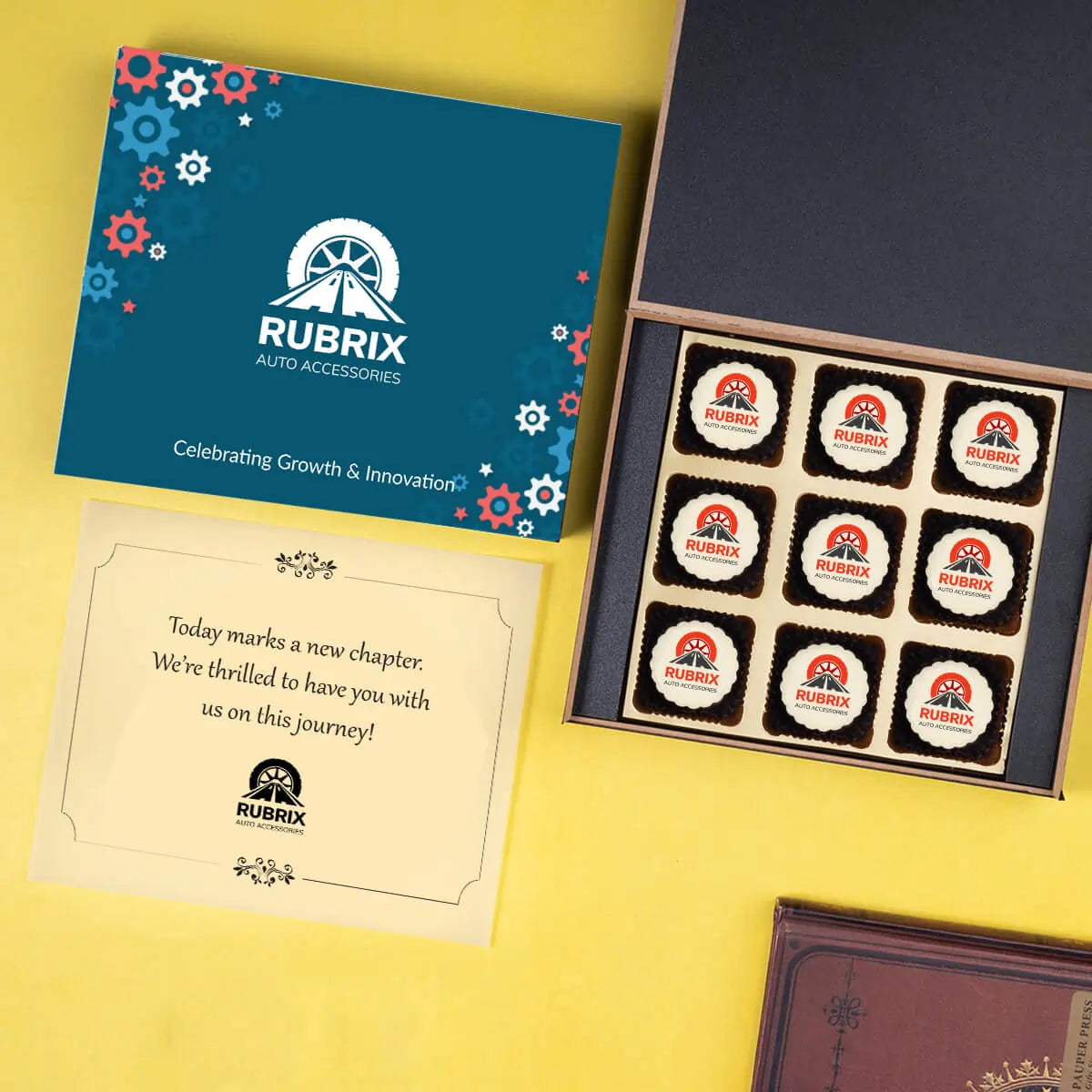
At events, refined consumables serve as soft brand introductions rather than direct sales tools. Items such as elegant chocolate boxes work well as giveaway gifts at exhibitions and trade shows, creating recall without appearing transactional.
When event gifting aligns with closing gift philosophy, it reinforces a cohesive brand experience across touchpoints.
Why Subtle Luxury Wins Over Time
Modern luxury is increasingly defined by restraint. Insights from MIT Sloan Management Review suggest that premium clients value discretion, emotional intelligence, and personalization over overt displays of wealth.
This shift explains why understated, well-crafted gifts often outperform flashier alternatives. A beautifully presented personalized gift feels thoughtful, while an expensive but impersonal item may be quickly forgotten.
Conclusion: Making Gifting a Strategic Advantage
Finding the right gift value for high-end property clients is not about extravagance. It is about alignment. When deal size, personalization, timing, and presentation work together, gifting becomes a strategic asset rather than a formality.
The most successful luxury realtors treat gifting as part of their service philosophy. They understand that thoughtful gifts create emotional memory, strengthen loyalty, and quietly fuel referrals long after the transaction ends.
When executed with intention, premium gifting transforms from a cost into an investment—one that compounds in trust, reputation, and long-term client relationships.
Key Information
| Aspect | What to Consider | Why It Matters |
|---|---|---|
| Deal Size Alignment | Scale gift value proportionally | Prevents under- or over-gifting |
| Personalization Level | Names, messages, dates | Increases emotional recall |
| Gift Format | Consumable, home-relevant | Avoids permanence risks |
| Presentation Quality | Packaging & unboxing | Signals professionalism |
| Timing | Closing vs housewarming | Maximizes emotional impact |
| Branding Approach | Subtle, non-intrusive | Preserves luxury perception |
| Long-Term Intent | Referrals & repeat business | Turns gifting into ROI |
Frequently Asked Questions (FAQs)
1. How much should a realtor spend on a luxury closing gift?
There’s no fixed amount. The right spend depends on deal size, relationship length, and future referral potential. Many luxury realtors think in proportional ranges rather than flat budgets, focusing on perceived value and personalization instead of absolute cost.
2. Are expensive gifts always better for high-end property clients?
Not necessarily. High-net-worth clients value relevance and thoughtfulness more than price. A moderately priced, personalized gift often feels more meaningful than an expensive but generic item, especially when presentation and timing are well considered.
3. What type of gifts work best for luxury real estate clients?
Consumable, premium gifts tend to work best. They feel indulgent, avoid clutter, and suit a wide range of tastes. Items connected to the home or move-in experience generally create stronger emotional associations than decorative or permanent objects.
4. Should realtors personalize every high-value client gift?
Yes, but tastefully. Subtle personalization—such as a family name, congratulatory message, or move-in date—adds emotional value without feeling promotional. Over-branding or excessive logos can reduce perceived luxury.
5. Is it okay to give the same gift to all high-end clients?
Using the same format is fine, but value and customization should vary. Treating all luxury clients identically can feel impersonal. Adjust personalization depth and presentation based on relationship importance and deal context.
6. When is the best time to give a real estate closing gift?
While closing day is common, many luxury realtors prefer gifting a few days later or during the housewarming phase. This timing allows the emotional impact to land after transaction stress has passed.
7. Can gifting really lead to more referrals?
Yes. Thoughtful gifts strengthen emotional memory, making clients more likely to recommend you naturally. The key is making the gift feel personal and reflective of the relationship, not transactional.
8. What gifting mistakes should luxury realtors avoid?
Common mistakes include over-branding, choosing décor that may not match client taste, rushing the decision, and inconsistent gifting across similar clients. Subtlety, relevance, and consistency are far more effective.
9. How does gift presentation influence perceived value?
Presentation often matters as much as the gift itself. High-quality packaging and a refined unboxing experience immediately signal care, professionalism, and attention to detail—core expectations in luxury real estate.
10. Is gifting only important at closing, or beyond?
Gifting can extend beyond closings. Strategic gifts during anniversaries, referrals, or key milestones reinforce long-term relationships and position the realtor as a trusted advisor rather than a one-time service provider.
