

From Booth Chat to Closed Deal: How to Turn Trade Show Conversations into Sales

From Booth Chat to Closed Deal: How to Turn Trade Show Conversations into Sales
Explore Giveaway GiftsKey Takeaways
-
Trade shows generate revenue only when booth conversations are intentionally connected to the sales pipeline, not when leads are collected passively.
-
Conversation quality beats lead quantity—capturing intent, context, and buying signals at the booth drives higher trade show sales conversion in the USA.
-
Fast, personalized follow-up within 48 hours dramatically improves conversion rates by preserving emotional and contextual recall.
-
Premium, thoughtful giveaway gifts act as memory anchors, reinforcing conversations long after the event ends.
-
Trade shows perform best as pipeline accelerators, not one-time sales events
-
You invest months planning a trade show—designing the booth, training staff, shipping giveaways, and booking travel. The event floor buzzes with energy. Conversations happen. Business cards are exchanged. QR codes are scanned.
And yet, weeks later, sales teams quietly admit the truth: most of those conversations never turned into revenue.
This is the uncomfortable reality behind trade shows in the USA. While events remain one of the most powerful B2B marketing channels, trade show sales conversion often underperforms expectations—not because trade shows don’t work, but because conversations are treated as outcomes instead of starting points.
High-performing exhibitors understand a critical shift: trade shows aren’t about “selling at the booth.” They’re about initiating sales momentum. The brands that win don’t talk more—they listen better, qualify smarter, and follow up faster.
In this guide, we’ll break down how to turn booth conversations into sales using proven event selling strategies, buyer psychology, and real-world trade show pipeline building frameworks—while showing how thoughtful physical touchpoints, including premium giveaway gifts, reinforce recall and trust.
One of the most effective ways brands do this is by using custom giveaway gifts for trade shows that extend the conversation beyond the booth.
Stand out from competitors by choosing unique giveaway gifts that go beyond standard pens and notebooks. Read more →
Why Trade Shows Still Matter for Sales
Despite the rise of digital marketing, trade shows continue to command serious budget allocation—especially in B2B industries across the USA. According to data published by Statista’s trade show marketing research, exhibitions consistently rank among the top-performing lead generation channels when measured by opportunity creation rather than immediate deals.
Trade shows compress what normally takes months into days: awareness, trust-building, discovery conversations, and competitive comparison.
However, trade shows rarely close deals on the floor. Instead, they shorten sales cycles by moving prospects from curiosity to sales readiness.
As highlighted in Harvard Business Review’s analysis on B2B engagement, buyers increasingly value human-led, insight-driven conversations early in their decision process—something trade shows uniquely enable.
Yet many exhibitors undermine this advantage by focusing on collecting as many leads as possible, pitching instead of diagnosing needs, and treating giveaway gifts as swag rather than strategy.
If booth conversations are not intentionally aligned with your sales process, you end up with spreadsheets of contacts—but no pipeline momentum.
Corporate Giveaway Gifts for Expo, Exhibition & Trade Shows
Attract attention and drive brand recall with premium corporate giveaway gifts featuring personalized chocolate branding for expos and trade shows.
Explore Giveaway Gifts NowWhy Most Booth Conversations Fail to Convert
Most trade show conversations fail to convert because they are disconnected from the sales process.
One of the biggest issues is the lack of intent capture. Booth staff often have polite conversations but fail to uncover buying timelines, decision-making authority, or budget readiness. Without intent, sales teams cannot prioritize follow-ups effectively.
This is why structured qualification frameworks matter, as explained in the guide on trade show lead qualification for sales teams.
Another common mistake is treating all leads equally. A student collecting brochures and a VP evaluating vendors often receive the same generic follow-up. High-performing teams segment leads at the booth, not after the event.
Follow-up timing is another critical failure point. According to insights shared by McKinsey’s research on hybrid B2B sales, speed and relevance in follow-up directly impact conversion probability.
Finally, most booths lack a memory anchor. Without a physical reminder, prospects quickly forget who you were among dozens of exhibitors. Thoughtfully chosen premium edible gifts—such as branded chocolates in elegant boxes—serve as cognitive bookmarks that reconnect prospects to the original conversation.
The Four-Pillar Framework for Turning Conversations into Sales
High-converting exhibitors align booth interactions with four intentional pillars.
The first pillar is conversation design. Instead of asking generic questions, strong booth teams ask what prompted attendance, what challenges the prospect is trying to solve, and what would make the event worthwhile. These questions uncover buying signals rather than surface-level demographics.
For real examples your booth staff can use, reference scripts and icebreakers for trade show booth staff.
The second pillar is real-time qualification. Successful teams classify prospects into immediate opportunities, nurture-ready prospects, or brand awareness contacts. This ensures post-event sales actions are precise and prioritized.
This approach aligns with benchmarks discussed in how many leads you should expect from a trade show.
The third pillar is memory reinforcement. Behavioral science shows physical objects strengthen memory encoding. Premium corporate gifts—especially personalized edible gifts—create emotional resonance and long-term recall without feeling promotional.
Brands often explore curated options from the corporate gifts collection, including items like the 4 chocolate corporate gift box.
The final pillar is seamless sales handoff. Sales teams must receive conversation notes, qualification tags, and context to ensure follow-ups feel personal rather than generic.
According to MIT Sloan Management Review, unstructured customer conversations often reveal more actionable insight than forms or surveys—if captured correctly.
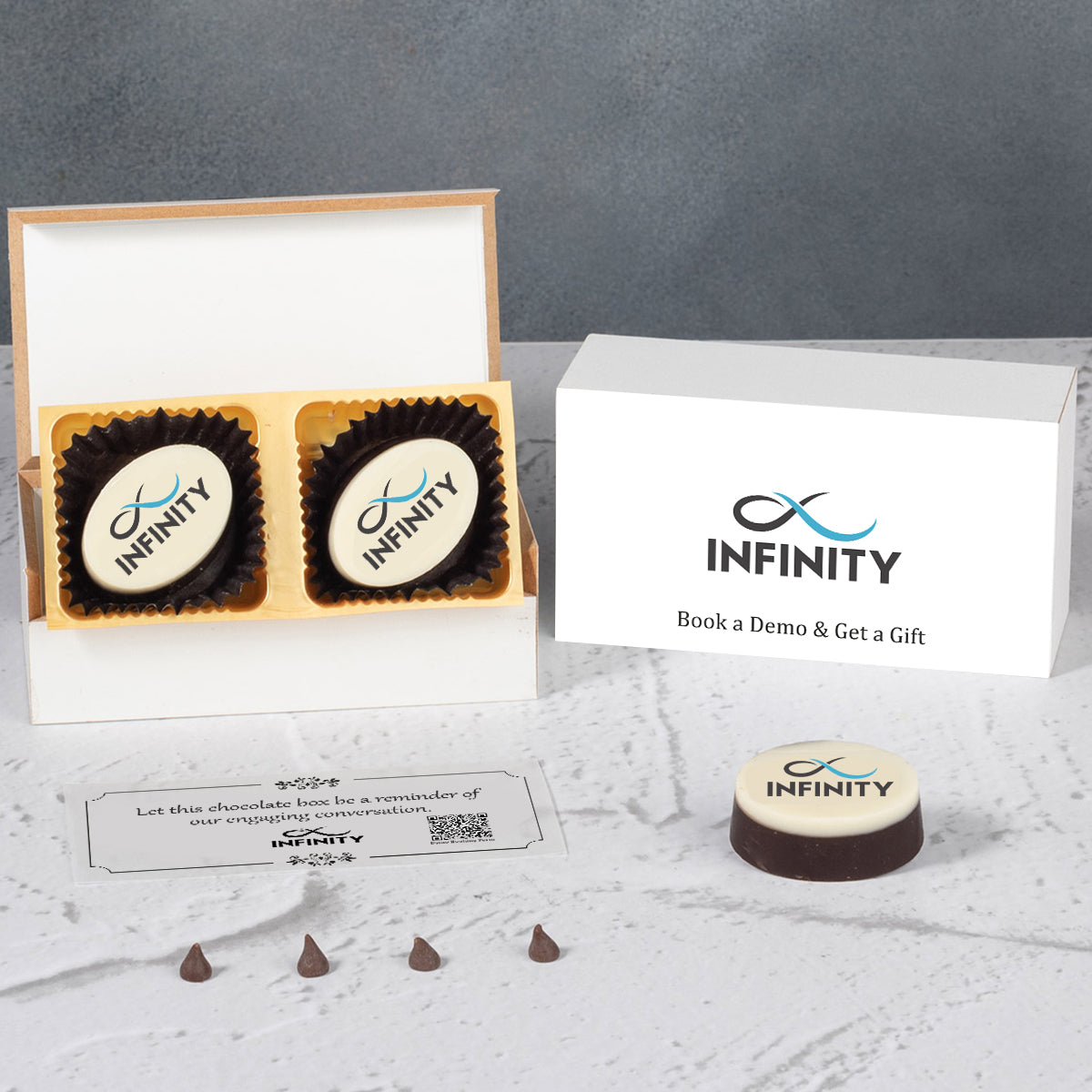
Book a Demo - Chocolate Box
📦 Box: Logo + “Book a Demo & Get a Gift”
📝 Message Inside: QR code linking to a demo booking form
🍫 Chocolates: One with “Demo” or calendar icon, one with logo
🎯 Purpose: Incentivizes visitors to book a demo, turning booth interest into qualified, scheduled leads.
Make it for your Brand
Data, Research, and Real-World Proof: What Actually Drives Trade Show Sales Conversion
Trade show success is not anecdotal. It is measurable, predictable, and repeatable when approached correctly.
According to insights published by Statista’s trade show effectiveness research, companies consistently rank trade shows among their highest-performing B2B marketing channels when success is measured by opportunity creation rather than on-the-floor sales.
A detailed analysis from Forbes Business Council highlights that trade show leads contacted within forty-eight hours show significantly higher engagement and response rates. The emotional memory of the booth interaction is still fresh, and the prospect can clearly recall the context of the conversation.
Research from McKinsey’s study on hybrid B2B sales reinforces this insight, noting that buyers now expect continuity between in-person conversations and post-event outreach. When follow-ups feel disconnected from the booth discussion, trust declines rapidly.
MIT Sloan Management Review further explains that buyers remember how a brand made them feel more than the exact words exchanged. This explains why exhibitors who reinforce conversations with thoughtful physical reminders experience stronger recall and higher response rates weeks after the event.
Trade show performance improves dramatically when teams stop asking, “How many leads did we get?” and start asking, “How many sales conversations did we meaningfully advance?”
Custom-branded giveaway gifts improve recall—your logo should feel integrated, not forced, into the product design. Read more →
Practical How-To: Converting Booth Conversations into Sales Step by Step
High-performing exhibitors follow a structured workflow to ensure booth conversations translate into revenue.
The first step is segmenting leads before the event ends. Instead of dumping all badge scans into one CRM list, top teams classify leads immediately into hot, warm, and cold categories based on buying intent, authority, and timeline.
This segmentation approach aligns with benchmarks explained in how many leads you should expect from a trade show.
The second step is following up with context rather than templates. Effective follow-up emails reference the exact booth discussion, acknowledge the prospect’s challenge, and propose a clear next step rather than pushing a generic sales pitch.
A proven structure for this approach is outlined in post-event follow-up strategies that convert.
The third step is reinforcing memory through a physical touchpoint. While digital follow-ups are expected, physical follow-ups are remembered. Many B2B teams now send premium edible gifts after the event to re-anchor the conversation and signal seriousness without pressure.
Custom chocolate gift boxes, subtly branded with logos or messages, work particularly well because they feel professional, shareable, and emotionally positive. Popular formats for post-event follow-up include the 2 chocolate corporate gift box and the 6 chocolate corporate gift box.
The final step is nurturing before selling. Not every booth conversation is sales-ready, which is why structured lead nurturing is essential to long-term trade show pipeline building.
Examples of effective nurturing sequences can be found in trade show lead nurturing email templates and why most trade show leads don’t convert and how to fix it.
Expert Insight: Why Gifting Works When Discounts Don’t
Discounts signal urgency. Gifts signal relationship intent.
Behavioral research shows that reciprocity and sensory memory outperform price incentives in early-stage B2B relationships. A discount can be ignored or forgotten, but a thoughtful gift is experienced.
According to Harvard Business Review’s analysis of modern B2B engagement, trust is built through consistent, human-centered interactions rather than transactional incentives.
This is why premium corporate gifting works best after a meaningful conversation. It reinforces trust without pushing for premature commitment and supports the sales journey instead of interrupting it.

Product Highlight Chocolate Box
📦 Box: Logo with 2–3 key product images or category icons
📝 Message Paper: “Discover our full range at [website] | Visit us at Booth #42”
🍫 Chocolates: Product icons or category names (e.g., AI Tool, CRM)
🎯 Purpose: Showcases core offerings at a glance—turning a simple giveaway into a mini product sampler that drives deeper interest.
Make it for your BrandTrends and Future Outlook for Trade Show Selling
Trade show selling is evolving, but it is not disappearing.
Key trends shaping the future include conversation-first booths replacing pitch-heavy displays, tighter alignment between sales and marketing around pipeline contribution, and hybrid follow-up strategies combining digital outreach with physical touchpoints.
There is also a noticeable shift away from bulk swag toward fewer, more premium giveaway items that align with brand positioning and buyer expectations.
As noted by Forbes Business Council, trade shows remain powerful because they deliver human nuance that digital channels cannot replicate.
Conclusion
Trade show conversations are not the finish line. They are the ignition.
Brands that want stronger trade show sales conversion in the USA must design conversations with intent, capture context rather than just contacts, follow up quickly and personally, and reinforce memory through thoughtful physical touchpoints.
When booth conversations are treated as the first chapter of a sales story rather than a checkbox, trade shows transform from cost centers into predictable pipeline engines.
When those conversations are remembered through smart follow-up and premium brand experiences, they turn into long-term relationships that close.
For B2B audiences, premium giveaway gifts signal credibility and help position your brand as high-value and trustworthy. Read more →
Key Information
| Aspect | What It Means | Why It Matters |
|---|---|---|
| Booth Conversations | Structured, intent-driven discussions | Drives qualified leads instead of random contacts |
| Lead Qualification | Segmenting hot, warm, and cold prospects | Enables faster and more relevant sales follow-up |
| Follow-Up Timing | Outreach within 24–48 hours | Preserves emotional recall and boosts engagement |
| Physical Touchpoints | Premium giveaway gifts | Improves brand recall and relationship trust |
| Sales Handoff | Sharing conversation context with sales | Prevents generic outreach and lost opportunities |
| Lead Nurturing | Ongoing engagement before selling | Converts longer-cycle prospects into buyers |
| Trade Show Role | Pipeline accelerator, not instant closer | Sets realistic expectations and ROI benchmarks |
Frequently Asked Questions (FAQs)
1. How do you turn trade show conversations into sales?
Turning trade show conversations into sales requires capturing buyer intent during the booth interaction, qualifying leads in real time, and following up quickly with personalized context. When conversations are aligned with your sales pipeline, trade shows become a reliable source of revenue rather than just lead volume.
2. Why don’t most trade show leads convert into customers?
Most trade show leads don’t convert because conversations lack qualification, follow-ups are delayed or generic, and sales teams receive no context. Without intent, timing, and relevance, leads quickly go cold—even if the booth interaction seemed positive at the event.
3. Are trade shows still worth it for B2B sales in the USA?
Yes, trade shows remain highly effective for B2B sales in the USA when used correctly. They excel at accelerating pipeline velocity, building trust, and shortening sales cycles—especially when conversations are treated as the start of a sales journey, not the final goal.
4. What should booth staff say to improve sales conversion?
Booth staff should ask intent-focused questions such as what prompted the visit, what challenge the prospect is solving, and what success looks like after the event. These questions reveal buying readiness and help prioritize post-event follow-up for higher conversion rates.
5. How fast should you follow up after a trade show?
The ideal follow-up window is within 24 to 48 hours after the event. This timing preserves emotional recall from the booth conversation and significantly improves response rates, engagement, and the likelihood of advancing the lead into the sales pipeline.
6. How do giveaway gifts impact trade show sales conversion?
Giveaway gifts improve trade show sales conversion when they reinforce a meaningful conversation. Premium, thoughtful gifts act as memory anchors, helping prospects remember your brand and discussion long after the event—unlike generic swag that is quickly forgotten.
7. What type of giveaway gifts work best for trade shows?
High-quality, brand-aligned giveaway gifts work best—especially edible or experiential items. Premium customized chocolates, for example, feel professional, are easy to share internally, and create positive emotional recall without appearing overly promotional.
8. How should sales teams handle trade show leads after the event?
Sales teams should receive detailed conversation notes, lead qualification tags, and clear next-step recommendations. This ensures outreach feels personal and relevant, avoids generic sales emails, and increases the chances of converting trade show leads into real opportunities.
9. Is it better to collect fewer high-quality leads at trade shows?
Yes. Fewer, well-qualified leads consistently outperform large volumes of unqualified contacts. Trade show pipeline building works best when teams focus on advancing meaningful sales conversations rather than maximizing badge scans or business card counts.
10. How long does it usually take to close trade show leads?
Trade show leads rarely close immediately. Most convert over weeks or months, depending on deal size and buying cycle. However, effective qualification, fast follow-up, and structured nurturing can significantly shorten the time to close compared to cold outbound leads.
